

Key takeaways
- Four streaming DACs compared for a dedicated listening room: hi-res network playback, balanced outputs, HDMI ARC, phono inputs and app control.
A dedicated listening room usually already has the amplifier and speakers settled, so the real decision is which single box feeds them. That box has to convert well, hand your amplifier a clean balanced or single-ended signal, and pull music from the services and files you actually use without a laptop tethered to the rack. The wrong pick leaves you with a fine DAC chained to an app you dislike, or a streamer whose outputs do not match the amp you own.

This guide is for listeners building or upgrading a one-room system around an existing amplifier and speakers. Every pick below combines network streaming and digital-to-analog conversion in one chassis, chosen from the DAC chips, output sets, and streaming protocols named in the Amazon listings themselves, so you can match each box to your room before ordering.
Quick Picks
As an Amazon Associate we earn from qualifying purchases.
| Product | Best for | Key spec |
|---|---|---|
| Eversolo DMP-A6 | A file library plus streaming in one hub | Dual ES9038Q2M DACs, DSD512 and PCM 768kHz |
| Bluesound NODE | Homes already running BluOS in other rooms | BluOS grouping for up to 64 players |
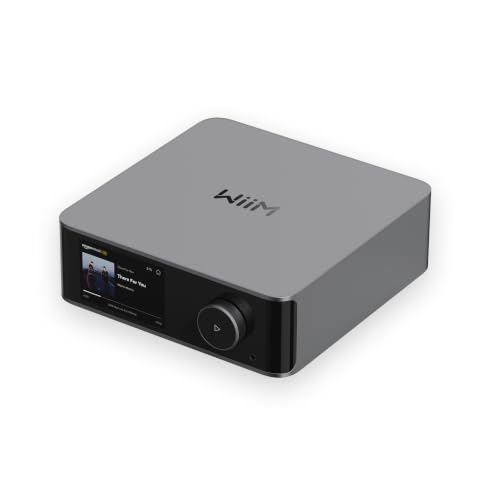
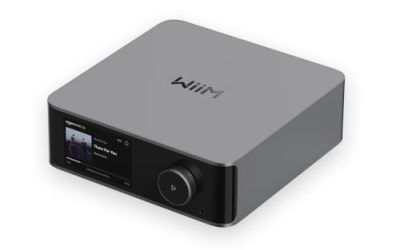
| WiiM Ultra | Rooms where the TV and a turntable join in | HDMI ARC plus MM/MC phono input |
| FiiO R7 | Nearfield listening with serious headphones | ES9068AS DAC with THX AAA 788 headphone amp |
How to Choose
Conversion Quality and Format Support
The DAC section decides which files play at full resolution. Listings state the ceiling plainly: the Eversolo DMP-A6 handles PCM up to 768kHz and native DSD512 with full MQA decoding, while the WiiM Ultra and Bluesound NODE top out at 24-bit/192kHz and 32-bit/384kHz conversion respectively. If your library holds DSD downloads or MQA titles, that ceiling matters. If you stream from Tidal or Qobuz at 24-bit/192kHz, every pick here covers you, and the chip pairing, such as dual ES9038Q2M chips running one per channel, becomes the finer point to compare.
Outputs That Match Your Amplifier
Check the back panel against your amplifier before anything else. A power amp or integrated with balanced inputs pairs best with a unit offering XLR outputs, like the Eversolo DMP-A6 with its 5.2V balanced feed. Single-ended RCA is universal but more exposed to hum on long cable runs across a room. Also decide whether the streaming DAC will set volume as a digital preamp or pass a fixed signal to an existing preamp, and whether you need a subwoofer output, which the WiiM Ultra includes and the others here do not list.
The Streaming Platform Behind the Box
You will live in the app far more than the spec sheet, so the platform deserves equal weight. BluOS on the Bluesound NODE groups up to 64 players for whole-home playback and suits houses already invested in that family. The Eversolo runs Android 11 with Tidal, Qobuz, Amazon Music, and Highresaudio built in, plus AirPlay 2. The WiiM Ultra leans on Spotify Connect, TIDAL Connect, Google Cast, and Roon Ready support. The FiiO R7 takes the open route, running Android 10 so services install as apps on the unit itself.
Extra Inputs and Room-Friendly Features
A listening room rarely holds one source. HDMI ARC on the WiiM Ultra and HDMI eARC on the Bluesound NODE let the television share the good speakers, and the WiiM adds a phono input for moving-magnet and moving-coil cartridges, turning one box into the system hub. Room correction, touchscreens, and headphone outputs also separate these picks: the WiiM Ultra carries a 3.5-inch screen and room correction, while the FiiO R7 builds its case around a THX AAA 788 headphone stage for late sessions at the same rack.
The 4 Best Options
Eversolo DMP-A6
The DMP-A6 suits the listener whose room pulls double duty as a music library, with an M.2 slot inside that accepts an SSD up to 4TB for local files alongside the streaming services. Its dual ES9038Q2M conversion, balanced XLR output, and 6-inch touchscreen make it feel like a permanent rack component rather than a puck, and the analog volume control lets it drive a power amplifier directly. Choose it when you want one hub for stored files, hi-res streams, and network shares, with a screen you can read from the listening chair.
Specs
- Dual ESS ES9038Q2M DAC chips, one per channel
- PCM up to 768kHz/32-bit and native DSD512 playback
- Full MQA decoding
- Android 11 with a 6-inch HD touchscreen
- Balanced XLR output at 5.2V and RCA output at 2.6V
- M.2 NVMe SSD slot accepting up to 4TB, drive not included
- Tidal, Qobuz, Amazon Music, and Highresaudio built in
- AirPlay 2 and Bluetooth 5.0 with aptX HD and LDAC
Best for: Listeners who keep a large local library and want it beside their streaming services in one rack hub.
Watch out for: The internal SSD is not included, so budget a drive if you plan to store files on the unit itself.
ASIN: B0C48P4TQT — View on Amazon
Bluesound NODE
The NODE is the natural pick when the listening room is one zone in a house that already speaks BluOS, since the platform groups up to 64 players streaming 24-bit hi-res audio in step. It keeps the hardware simple: a compact box with a 32-bit/384kHz DAC design, HDMI eARC for the television, and both wired Ethernet and wireless connections. There is no screen to glow in a darkened room, and control lives in the BluOS app. Pick it for a tidy front end that disappears into the rack and plays well with Bluesound gear elsewhere at home.
Specs
- 32-bit/384kHz premium DAC design
- Quad-Core 1.8GHz processor
- BluOS platform grouping up to 64 players in 24-bit hi-res
- HDMI eARC input for television sound
- AirPlay 2 and Bluetooth aptX
- Ethernet, USB, and optical connections
- Model N130, black finish
Best for: Households adding a serious listening room to an existing BluOS multiroom setup.
Watch out for: There is no display or touchscreen, so confirm you are happy controlling everything from the BluOS app.
ASIN: B0937LC7P2 — View on Amazon
WiiM Ultra
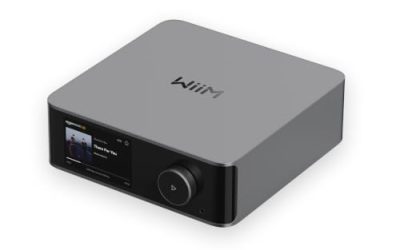
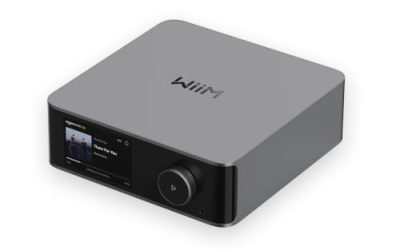
The Ultra fits the room where the stereo also handles movie nights and vinyl. It is the only pick here with both HDMI ARC and a phono input covering moving-magnet and moving-coil cartridges, plus a subwoofer output for a 2.1 layout. The ESS ES9038 Q2M DAC, 3.5-inch touchscreen, and built-in room correction give it a hub role well beyond plain streaming, and the headphone output covers quiet checks without waking the house. Choose it when one compact preamp-style box needs to gather the TV, the turntable, and your streaming services into a single input on the amplifier.
Specs
- ESS ES9038 Q2M DAC, 32-bit/384kHz conversion
- THD+N of -116dB and 121dB signal-to-noise on line out
- 3.5-inch touchscreen on an aluminum chassis
- Wi-Fi 6 and Bluetooth 5.3
- HDMI ARC input
- Phono input for MM and MC cartridges, plus line and optical inputs
- Headphone output and subwoofer output
- Streaming up to 24-bit/192kHz with room correction
Best for: Rooms where the television and a turntable share the same amplifier and speakers as streaming.
Watch out for: The listing states plainly that the Ultra cannot work as an AirPlay receiver, so iPhone households should plan on the WiiM app or Connect services instead.
ASIN: B0D41YCLW8 — View on Amazon
FiiO R7

The R7 takes a different shape: a desktop streaming player and DAC/amp built around an ES9068AS chip and a THX AAA 788 headphone amplifier, running Android 10 on a Snapdragon 660 processor. In a listening room it earns its place at the nearfield end, on a side desk or the top of the rack, where headphones do much of the late-night work and streaming services install as apps directly on the unit. Its listing names Spotify, Tidal, and Amazon Music support with DSD512 playback. Pick it when headphone listening shares the room with the main speakers.
Specs
- ES9068AS DAC chip
- THX AAA 788 headphone amplifier
- Snapdragon 660 processor
- Android 10 for installing streaming apps on the unit
- Bluetooth 5.0
- DSD512 playback support
- Spotify, Tidal, and Amazon Music support named in the listing
- Desktop streaming player, DAC, and amp in one chassis
Best for: Listening rooms with a desk or headphone corner beside the main system.
Watch out for: Android 10 is an older platform, so check that the current versions of your chosen service apps still support it before ordering.
ASIN: B0BWS9X7LY — View on Amazon
Which One Fits Your Situation
Your Library Lives on Drives and Network Shares
Pick the Eversolo DMP-A6. The internal SSD slot, dual-chip conversion, and balanced outputs suit a room built around owned files as much as streams, and the big touchscreen keeps browsing pleasant from across the room. Its Android base also covers the major hi-res services when you want to wander beyond the shelf.
The Rest of the House Already Runs BluOS
Pick the Bluesound NODE. Joining an existing BluOS household means the listening room groups with the kitchen and bedroom players in the same app, at 24-bit resolution, with no second ecosystem to teach anyone. The HDMI eARC input also lets the room’s television use the main speakers without extra boxes.
The TV and Turntable Share the Rack
Pick the WiiM Ultra. HDMI ARC brings the television into the good system, the phono input handles vinyl without a separate stage, and the subwoofer output rounds out a 2.1 setup. Room correction then helps the combined system suit the space, which matters when one rig serves music, films, and records.
You Split Time Between Speakers and Headphones
Pick the FiiO R7 for the headphone hours and let it feed the main system whenever needed. The THX AAA 788 stage is the strongest headphone case in this group, and having streaming apps on the unit itself means late sessions need no phone or laptop open on the desk beside you.
Common Mistakes
- Buying a streamer with no built-in DAC, then finding the analog stage you planned to use was the whole point of the upgrade.
- Ignoring output type: feeding a balanced power amplifier from a unit with only RCA outputs, or the reverse, and adapting cables as an afterthought.
- Choosing on DAC chip alone while overlooking the app and platform you will open every day to find music.
- Forgetting the television: a room that doubles for films benefits from HDMI ARC or eARC, which only some streaming DACs include.
- Assuming every unit receives AirPlay; the WiiM Ultra listing states it cannot, so check the protocol list against your phones and tablets.
Frequently Asked Questions
Can a streaming DAC replace my preamp?
Often, yes. Units with analog volume control and the outputs your power amplifier needs, like the Eversolo DMP-A6 with balanced XLR, can drive an amp directly. If you own several analog sources, such as a separate phono stage and a tuner, a dedicated preamp still gathers them more gracefully, and the streaming DAC can feed it a fixed-level signal instead.
Is balanced XLR worth it in a listening room?
It earns its keep when cable runs are long or the rack sits near dimmers and other noise sources, because balanced lines reject interference picked up along the run. For a short half-meter hop between stacked components, a good RCA connection performs the same job, so let your amplifier’s inputs and your room layout decide rather than chasing the connector alone.
Can these units play files stored on my home network?
Yes, network playback is core to the category. The Eversolo DMP-A6 adds an internal SSD slot for a library inside the box, and the group as a whole reaches shared folders and servers over Ethernet or Wi-Fi through their apps. Check the listing for the exact services and file ceilings, since DSD and PCM limits differ between models.
What hi-res support should I look for?
Match the ceiling to your sources. Streaming services top out at 24-bit/192kHz, which every pick here handles. Owned downloads go higher: the DMP-A6 lists PCM to 768kHz and native DSD512, while the FiiO R7 lists DSD512 as well. Buying far beyond your library buys nothing audible, so inventory your files first and choose the ceiling that covers them.
More from Amazon
Programs that pair well with the guide above. Offers and eligibility are set by Amazon and may change.
Free shipping on eligible items, Prime Video and more. Eligible new members can start with a free trial.
Start a Prime free trialAudiobooks and podcasts to listen to on the go. Eligible new members can start with a free trial.
Try Audible freeAd-free music streaming. Eligible new subscribers can start with a free trial.
Try Music Unlimited freeA free business account with business pricing and bulk-buying tools for work, shop or home office.
Create a business accountAs an Amazon Associate we earn from qualifying purchases.




Write Your Review
No reviews yet. Be the first to share your experience!