

Key takeaways
- Wearing a worn-out brace with stretched elastic and loose straps.
- Buying the wrong size and expecting it to work.
- Relying on a brace for a serious injury without a diagnosis.
- Ignoring skin irritation or numbness.
The best ankle brace for most athletes is a lace-up brace such as the ASO from Med Specialties or the Active Ankle T2, because lace-ups give firm, adjustable support for basketball, volleyball and soccer. Stirrup braces like the Aircast A60 allow more natural motion for lighter support, and a sleeve or sport-specific brace like the McDavid or Zamst suits athletes who want compression with moderate stability. This is general information, not medical advice, so see a clinician if you have a recent injury or ongoing instability.
Our top picks

As an Amazon Associate we earn from qualifying purchases at no extra cost to you.
Quick Comparison of the Best Ankle Braces for Sports
| Pick | Best for | Type | Support level | Fits in shoe | Price range |
|---|---|---|---|---|---|
| ASO Ankle Stabilizer | Best overall lace-up | Lace-up with straps | Moderate to high | Yes, with roomy shoes | Mid |
| Active Ankle T2 | Best rigid support | Lace-up with plastic stays | High | Bulkier | Mid |
| Aircast A60 | Best stirrup brace | Stirrup with air cells | Moderate | Slim | Mid |
| McDavid 195 | Best for basketball | Lace-up with figure-eight strap | Moderate to high | Yes | Mid |
| Zamst A1-S | Best light sports support | Elastic with straps | Light to moderate | Slim | Mid to upper-mid |
| Mueller Hinged Ankle Brace | Best budget stability | Hinged | Moderate to high | Bulkier | Budget to mid |
Brace models are updated regularly, so verify the current model name and sizing chart on the maker’s site.
Best Overall Lace-Up: ASO Ankle Stabilizer
The ASO has been used by athletes and trainers for years. It combines a lace-up closure with figure-eight straps and a semi-rigid design to limit twisting. Because the laces are adjustable, you can tune the fit through the day, even as feet swell.
It is a bit bulky and may require shoes with extra volume. Break it in with short sessions first. Wash by hand and air dry to keep elastic fibers healthy.
Best Rigid Support: Active Ankle T2
The T2 adds plastic stays on either side, which limit side-to-side motion. This is useful for athletes returning to play who need extra stability, or for those with repeated rolls. A figure-eight strap boosts the support.
The trade-off is mobility and bulk. Many players find it limits cutting speed, and you may need half a shoe size up. Talk to a clinician before relying on a rigid brace for long periods.
Best Stirrup Brace: Aircast A60
The Aircast A60 uses a stirrup design with air cells that wrap the sides of the ankle. It is slim enough to fit most shoes and allows plantar and dorsiflexion while limiting inversion and eversion. It is a classic for mild to moderate sprains and as a preventative option.
It does not lock the ankle as tightly as a lace-up, and the sides can slip if the shoe is loose. Wear it with snug socks.
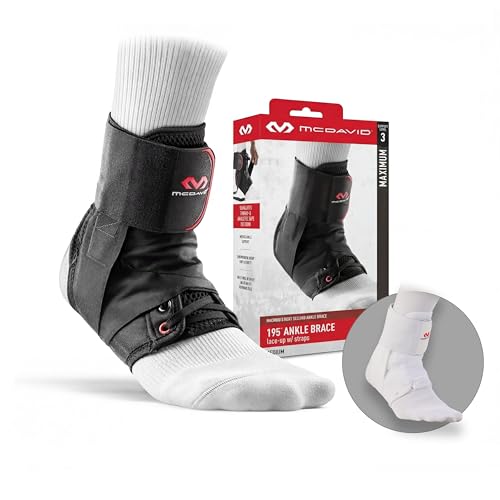
Best for Basketball: McDavid 195
McDavid is a long-standing sports bracing brand, and its lace-up models with figure-eight straps are common on basketball courts. The design provides moderate to high support with a profile that fits court shoes.
As with any lace-up, fit is key: too tight will cause numbness, too loose will not support. Test the brace walking and running before game use.
Best Light Sports Support: Zamst A1-S
Zamst, a Japanese brand, is often used by runners, volleyball players and soccer players. The A1-S is a lightweight brace with straps and a low profile that suits athletes who want support without much bulk.
It is a better preventive brace than a rehab brace. It costs more than basic sleeves, and sizing depends on ankle circumference.
Best Budget Stability: Mueller Hinged Ankle Brace
Mueller makes a hinged brace that offers side support while allowing forward and backward flex. It’s a practical option for athletes who want stability at a lower price.
The hinge adds bulk, and it may not fit in tight cleats. Use it in roomy shoes or for training.
Which Brace Type for Which Situation
| Situation | Brace type | Why |
|---|---|---|
| Past ankle sprain, returning to court sports | Lace-up | Adjustable, firm support |
| Repeated rolls or instability | Rigid or hinged | Limits side-to-side movement |
| Minor stiffness, want compression | Sleeve | Light support, comfort |
| Running or soccer, tight cleats | Low-profile strap brace | Fits in shoes |
| Prevention with no injury history | Stirrup or light lace-up | Balance of support and mobility |
How to Choose and Fit an Ankle Brace
Measure the ankle. Use the maker’s chart, usually based on the circumference around the ankle bone or shoe size. Brands differ.
Match the sport. Basketball and volleyball involve cutting and jumping and often favor lace-up or hinged braces. Running and soccer favor slimmer designs.
Check the shoe. Choose a shoe with room, and try the brace with your usual socks.
Do not over-rely. A brace complements strengthening and balance work. Ask a physical therapist about exercises.
Know when to see a professional. Persistent swelling, pain or giving way requires an evaluation.
Mistakes to Avoid
- Wearing a worn-out brace with stretched elastic and loose straps.
- Buying the wrong size and expecting it to work.
- Relying on a brace for a serious injury without a diagnosis.
- Ignoring skin irritation or numbness.
Fit Sizing Guide
| Measurement point | How to measure | Why it matters |
|---|---|---|
| Ankle circumference | Tape around the narrowest part above the ankle bones | Used by sleeves and strap braces |
| Figure-eight circumference | Wrap tape over the arch, around the heel and back | Used by some stirrup and lace-up charts |
| Shoe size | Your usual athletic shoe size | Used by many lace-up braces |
| Shoe volume | Try the brace inside the shoe you play in | Bulky braces need roomy shoes |
Measure at the end of the day when swelling is typical, and compare numbers with the specific brand’s chart, since a medium in one line may be a large in another.
How to Put On a Lace-Up Brace Correctly
- Loosen the laces fully and open the straps so the brace opens wide.
- Slide your foot in with your sock smooth, and pull the tongue so it lies flat.
- Center the heel in the brace, then lace from the toes upward with even tension.
- Tie the laces and secure the hook-and-loop closure over them.
- Wrap the figure-eight straps around the arch and heel, pulling snug but not painful.
- Put on your shoe and walk, jog and make a few cuts before starting practice.
The reason for lacing from the toes up is to prevent the brace from pushing swelling away from the foot. If you feel tingling or your toes change color, loosen immediately.
Strength and Balance Work to Pair With a Brace
A brace supplements the muscles that control your ankle. Many physical therapists suggest single-leg balance drills for 30 seconds per side, calf raises for three sets of 12 and resistance band ankle movements in four directions. These can be done daily for a few minutes. Starting with a clinician is wise if you have had a recent sprain, because loading too early or too aggressively can slow recovery.
Frequently Asked Questions
Do ankle braces prevent sprains?
Studies in sports medicine suggest braces can reduce the rate of repeat sprains, especially after a previous injury. They do not guarantee prevention.
Should I wear a brace if I have never sprained my ankle?
It is optional. Some athletes use one for added confidence, while strength and balance training offer other benefits.
Lace-up or stirrup brace?
Lace-ups provide more adjustable support and are common in court sports. Stirrups are lighter and slimmer but less restrictive.
Can I wear a brace in any shoe?
Not always. Many braces need extra room, so try your shoes with the brace or size up if necessary.
How long does a brace last?
With regular use, several months to a season. Replace it when the fabric stretches or straps no longer hold.







Write Your Review
No reviews yet. Be the first to share your experience!