

Key takeaways
- FG (firm ground): molded studs for natural grass pitches.
- MG (multi-ground): versatile for most surfaces except indoor courts, according to Nike.
- AG (artificial grass): shorter conical studs for synthetic grass.
- TF (turf): multiple small studs for turf fields.
- IC (indoor court): flat rubber soles with grooves for hard indoor floors.
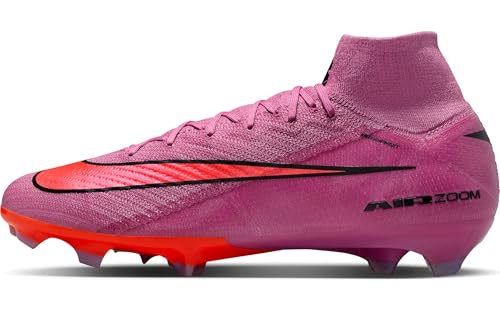
The best Nike soccer cleat depends on your role and foot shape: Mercurial suits fast forwards and wingers with narrow to medium feet, Phantom suits passers and playmakers who want ball grip and a roomier forefoot, and Tiempo suits players who want a soft touch and an easy fit. Most recreational players get the best balance from a Pro or Academy version, while the Elite tier is for players who will notice the lighter materials and finer finishing.
Our top picks


As an Amazon Associate we earn from qualifying purchases at no extra cost to you.
Nike Soccer Cleats at a Glance
Nike’s own guide divides its range into three lines (Mercurial, Phantom and Tiempo) and four tiers (Elite, Pro, Academy and Club). The table below combines that structure with independent coverage from Unisport and the Cleats Hub aggregator. Several models were refreshed around mid-2026, so older names in this article are labeled as previous generation.
| Model | Best for | Key stated features | Limits |
|---|---|---|---|
| Mercurial Superfly 11 Elite | Sprinters, forwards, wingers | FlyWeave Ultra upper, 8mm Air Zoom unit and stitch-and-turn heel, per Unisport | Snug Mercurial fit; Unisport says some may find the bounce unnecessary |
| Mercurial Superfly 11 Pro | Speed on a smaller budget | FlyWeave upper with dedicated lockdown zones, per Unisport | Unisport questions the value at Pro pricing |
| Mercurial Vapor 17 Elite | Minimal, barefoot-style feel | Atomknit upper and FlyLite plate; Unisport cites about 150 grams | Less forefoot responsiveness and midfoot stiffness |
| Phantom 6 Elite (High and Low) | Passing, shooting, ball grip | Grip Shroud forefoot; the High adds a Dynamic Fit collar | The Low has a looser heel; the High can feel compressed at the ankle |
| Phantom 6 Pro | Lightweight control | Venom Skin textile mesh with a film coating | Unisport describes the outsole as underwhelming |
| Tiempo Maestro Elite | Soft touch and comfort | Tech Leather upper, U-throat and floating tongue | Heel opening can feel loose |
| Tiempo Maestro Academy | Budget buyers wanting comfort | FlyTouch synthetic upper, wider fit, padded heel | Thicker, foamier heel |
| Tiempo Ligera Pro | Soft leather feel for less | Tech Leather and a stitch-and-turn heel | Loose heel and a less developed outsole |
The Three Nike Lines Explained
Mercurial: the speed line
Nike describes Mercurial as the line for players who sprint while keeping traction and contact on the ball, which makes it the usual pick for forwards and wide midfielders. The newest versions, Superfly 11 and Vapor 17, were listed for a June 2026 launch. Unisport ranks the Superfly 11 Elite as the best Nike boot of 2026, crediting a secure fit and the Air Zoom sensation, while also noting it is not the lightest or most comfortable. A general fit summary from the search results describes Mercurial as snug, which may feel restrictive on wide feet.
The Vapor 17 takes a different approach. Unisport cites roughly 150 grams for the Elite and calls it Nike’s lightest ever. The Pro version is listed at about 163 grams and has a stretchier Flyknit upper, which Unisport says gives a more accommodating fit but less of the classic Mercurial lockdown.
Phantom: the precision line
Phantom is built around ball contact. Nike says its Gripknit upper enhances touch and positions the line for central midfielders and playmakers. The Phantom 6 remains current in 2026, and Unisport ranks the Phantom 6 Elite High third among Nike boots for its distinctive grip on the ball and more secure heel fit. It recommends the High for players with slimmer feet and the Low for wider forefeet, though it notes the Low has a looser heel opening. The Phantom 6 Academy is also described as a good value pick.
Tiempo: the touch line
Tiempo is Nike’s comfort and touch line. Nike says its Techleather is softer than natural leather and adapts to the shape of the foot. Unisport ranks the Tiempo Maestro Elite second among Nike boots, praising the soft upper and calling the shape low and pointed like a well-worn glove. The Tiempo Legend 10 and earlier are previous generation models, and the Tiempo Maestro has taken over as the current top-end line.
Choosing by Budget Tier
| Tier | Spend level | What Nike says it offers | Typical trade-off |
|---|---|---|---|
| Elite | Premium | Professional-grade materials and plates | Highest cost; some models are snug or need break-in |
| Pro | Mid-range to premium | Near-Elite features | Unisport says Pro pricing can reduce value on some models |
| Academy | Budget to mid-range | Multi-surface designs for regular players | Simpler synthetics and heavier feel |
| Club | Budget | Beginner-friendly durable builds | Least refinement |
For many players, the Academy tier is the sensible entry point. The Tiempo Maestro Academy is described by Unisport as comfortable from the box with a wide fit, and the Phantom 6 Academy is highlighted as good value. Younger players who are still growing often do better in Academy or Club tiers because they outgrow shoes quickly.
Surfaces and Stud Types
Nike labels each cleat by the surface it is built for, and choosing the wrong one affects both comfort and safety.
- FG (firm ground): molded studs for natural grass pitches.
- MG (multi-ground): versatile for most surfaces except indoor courts, according to Nike.
- AG (artificial grass): shorter conical studs for synthetic grass.
- TF (turf): multiple small studs for turf fields.
- IC (indoor court): flat rubber soles with grooves for hard indoor floors.
Players who split time between grass and synthetic pitches often choose MG or AG for convenience, while those on mainly natural grass may prefer FG for the traction. If your league or school has surface rules, follow them.
Fit and Foot Shape
- Narrow to medium feet: Mercurial and the Phantom 6 Elite High are described as the snug options.
- Wide feet: a comparison from the search results suggests Phantom and Tiempo work well for wide feet. The Mercurial Vapor 17 Pro and Superfly 11 Pro are described by Unisport as more accommodating than their Elite counterparts.
- Loose heels: Unisport notes loose heel openings on several models, including the Tiempo Maestro Elite, Tiempo Ligera Pro, Phantom 6 Pro and Phantom 6 Elite Low. Players with narrow heels should try them on, and thicker socks or heel pads are an option.
- Break-in: Leather and knit uppers can take a few sessions to settle, so wear new cleats in training before match day.
Care and Maintenance
- Brush off mud and wipe the upper with a damp cloth after play.
- Remove the insoles and let the shoes dry at room temperature, away from radiators and direct sun.
- Do not machine-wash cleats, since heat and tumbling can damage the glue and upper.
- Rotate pairs during busy weeks to let the cushioning recover.
- Replace cleats when studs are visibly worn down, the plate cracks or the upper has split near the flex point.
Pick This If You Want…
| Pick this | If you want | Keep in mind |
|---|---|---|
| Mercurial Superfly 11 Elite | The current top Nike speed boot | Snug fit; premium spend |
| Mercurial Vapor 17 Pro | A lightweight speed boot with a wider fit | Stretchier upper means less lockdown |
| Phantom 6 Elite High | Grip on the ball with a secure heel | Can feel compressed at the ankle |
| Phantom 6 Elite Low | More forefoot width and volume | Looser heel opening |
| Phantom 6 Academy | Control-focused play on a mid-range spend | Simpler materials than Elite |
| Tiempo Maestro Elite | The softest touch and comfort | Heel can feel open |
| Tiempo Maestro Academy | A comfortable, wide-fitting starter boot | Foamier, thicker heel |
Alternatives to Nike
- Adidas F50, Predator and Copa: comparable speed, control and comfort lines. Reviewers describe the F50 as narrow to medium, the Predator as wide in the forefoot and the Copa as roomy.
- Previous-generation Nike models: the Superfly 10 and Phantom GX 2 were well regarded by reviewers, and the Superfly 10 Academy MG with a high collar was singled out as a value pick in one review. Older stock may carry lower prices.
- Puma and Mizuno: both make boots in speed and leather styles. Their fits differ from Nike, so trying a pair is wise if Nike feels wrong.
Frequently Asked Questions
Which Nike cleat is best for wide feet?
Reviewers point to the Phantom and Tiempo lines for wider feet. Unisport describes the Phantom 6 Elite Low as having extra forefoot width and volume, and the Tiempo Maestro Academy as a wide fit. The Mercurial Vapor 17 Pro and Superfly 11 Pro are described as more accommodating than the Elite versions.
Is the Mercurial only for forwards?
No. Nike positions the line for players who sprint, including forwards and wide midfielders, but fullbacks and anyone who values a light, snug boot also wear it. The trade-off is a tighter fit that may not suit wide feet.
What is the difference between Elite, Pro and Academy?
Nike describes Elite as professional-grade, Pro as near-Elite, Academy as mid-range and Club as beginner-friendly. Elite and Pro use lighter, more refined uppers and plates, while Academy and Club use sturdier synthetics for regular play.
Are older Nike models still worth buying?
Previous-generation models such as the Superfly 10 and Tiempo Legend 10 can still be good boots, and stock may be discounted. Be aware they are no longer the current line, and fit or plate changes between generations can matter.
Which Nike cleat is best for artificial turf?
Look for AG or TF versions rather than FG, as Nike describes AG as using shorter conical studs for synthetic grass and TF as having multiple small studs for turf fields. MG versions can also work on many surfaces. Follow the surface rules of your league.
How do I know if my cleats are too small?
Your toes should not press against the front when you stand, and your heel should not lift when you run. A snug fit is normal on speed boots, but pain, numb toes or blisters suggest the size or shape is wrong, and a sports podiatrist can advise on persistent foot pain.




Write Your Review
No reviews yet. Be the first to share your experience!