

Key takeaways
- The last ten minutes after a hard session decide how the next workout feels, and plenty of athletes spend those minutes on a foam roller.
The last ten minutes after a hard session decide how the next workout feels, and plenty of athletes spend those minutes on a foam roller. Choosing one for recovery is a different job from choosing one for warm-ups or core drills. You want a tool you will actually pull out when you are tired, that fits your legs, back, or calves, and that lets you control how much body weight you put through it. A roller that is too hard, too short, or too bulky ends up leaning in the corner of the garage.
This guide is written for runners, lifters, court-sport players, and anyone building a cool-down routine at home. It compares seven rollers and roller kits based on the details in their listings, including length, density, surface design, and included extras. The goal is simple: help you match the roller to your routine, your space, and your tolerance for pressure in 2026 and beyond.
Quick Picks
Our top picks



As an Amazon Associate we earn from qualifying purchases at no extra cost to you.
| Product | Best for | Key spec from the title |
|---|---|---|
| Basics 18-inch roller | Simple, all-purpose cool-downs | High-density, 18 inches, black |
| Basics 36-inch roller | Full-back and long-axis rolling | High-density, 36 inches |
| 321 STRONG 3-Zone roller | Adjustable pressure by hand position | Medium density, palm, finger, and thumb zones |
| Krightlink 5-in-1 set | Buyers who want a full kit | High density roller plus massage ball, resistance band, and carry bag |
| TriggerPoint Grid 1.0 | Travel bags and gym lockers | 13 inches, multi-density |
| Fitizen mini roller | Calves, forearms, and tight spaces | 12 x 4 inches, firm EVA foam |
| The Original Body Roller | Firm, no-frills back and leg work | High-density foam roller massager |
How to Choose
Length decides what you can reach
A 12-inch to 13-inch roller packs into a gym bag and works well for calves, quads, and glutes, but it will not cradle the whole upper back. An 18-inch roller is the common middle ground, wide enough for both legs and a single-pass back roll. A 36-inch roller lets you lie along it lengthwise, which many people like for the spine and for balance work. Measure the floor space you will use; a long roller needs a clear runway of about six feet.
Density and surface texture
Smooth, high-density foam gives firm, even pressure and holds its shape over time. Medium density is more forgiving if you are new to rolling or tend to tense up. Textured or multi-density designs add ridges that concentrate pressure, which can feel intense. If a listing does not state density, check the description before you buy. Do not assume a knobby surface is automatically better; it simply changes how pressure is distributed.
Solid roller or kit
Kits that add a massage ball, a stick, or a stretch strap look like a bargain, yet the extras vary in quality. A ball is genuinely useful for feet and shoulder blades. A strap helps with hamstring and calf stretching after your rolling. If you already own those items, a single quality roller is the leaner choice. Look at what the listing says each component is made of, and skip kits that hide the details.
What to ignore, and where budget models cut corners
Ignore giant claims about speed or results; a roller is a self-massage tool, and the spec sheet cannot promise outcomes. Cheaper hollow-core or soft foam rollers can flatten after a few weeks of regular use, so firmer EVA or molded foam is worth the small step up in cost. Check the weight limit if the listing gives one, and take any discomfort that persists to a clinician rather than assuming a different roller will solve it. Also think about cleaning: a smooth, closed-surface roller wipes down in seconds, while deep grooves collect sweat and chalk, which matters if you share equipment with a training partner or keep the roller in a gym bag.
The 7 Best Options
Basics High-Density Foam Roller, 18 Inches
This is the no-fuss pick for athletes who want one roller for everything from hamstrings to the upper back. The listing describes it as high-density and aimed at exercise and recovery, which suggests a firm feel that keeps its shape. Eighteen inches is wide enough to roll both legs at once.
- Strength: firm high-density build suits regular post-workout use.
- Strength: the 18-inch length fits most gym bags and apartment closets.
- Trade-off: a plain surface offers no zones, so pressure control depends entirely on your body position.
Skip it if you want ridges or a variety of textures, or if you are very sensitive to firm foam. Buyers who plan to roll the full length of the spine may also prefer a longer cylinder than this one.
Basics High-Density Foam Roller, 36 Inches
The long version of the same idea, intended for exercise, stretching, and muscle recovery. At 36 inches you can lie lengthwise with your head and tailbone supported, which many buyers use for chest-opening and balance work in addition to rolling. It suits home gyms and yoga corners with a little floor to spare.
- Strength: the length supports full-spine and lengthwise positions.
- Strength: high-density foam is described as firm and consistent.
- Trade-off: it is bulky to store and nearly impossible to pack for travel.
Skip it if your space is tight or you mostly roll calves and quads while seated. In that case the shorter Basics model or a compact roller will feel less awkward on a crowded floor.
321 STRONG Patented 3-Zone Massage Roller
This roller is designed around three zones shaped like a palm, fingers, and thumb, so the same tool can change how it feels depending on where you place your body. The title lists medium density, which is a friendlier starting point than very firm foam. It fits athletes who like to adjust pressure instead of committing to one feel.
- Strength: the zones let you vary pressure without switching tools.
- Strength: medium density is approachable for people returning from a break.
- Trade-off: the contoured surface takes a few sessions to learn.
Skip it if you want a plain, ultra-firm cylinder that does not need technique. Athletes who already know exactly how much pressure they like may find the extra shaping unnecessary.
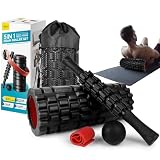
Krightlink 5-in-1 Foam Roller Set
A kit for buyers who want a starter pack. The title lists a high-density deep tissue roller together with a massage ball, a resistance band, and a carry bag. That bundle covers back, legs, and feet, and the bag makes it easy to move between home and the gym.
- Strength: several tools in one purchase simplify setting up a routine.
- Strength: the carry bag helps with tidy storage and transport.
- Trade-off: component quality and sizes should be confirmed on the listing before you count on each piece.
Skip it if you already own a ball and band, since you would be paying for duplicates. Anyone who wants a single premium roller instead of a bundle of mixed-quality accessories should look elsewhere on this list.
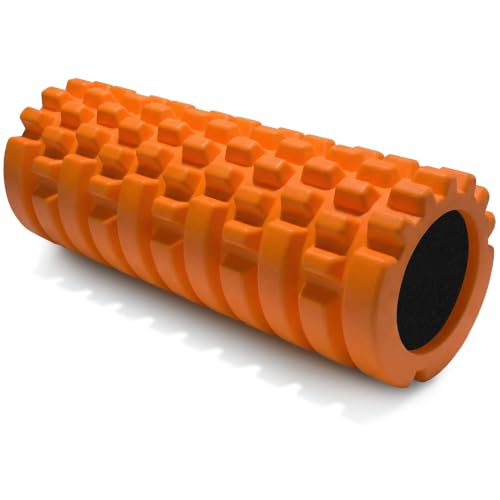
TriggerPoint Grid 1.0 Foam Roller, 13 Inches
A compact, multi-density roller with a distinctive grid pattern. The title calls it a deep tissue massage roller for muscle recovery, and the 13-inch length makes it a favorite for locker bags and carry-on luggage. The raised pattern is designed to give you varied contact points.
- Strength: the short length fits in nearly any bag.
- Strength: multi-density construction adds variety to a basic cylinder.
- Trade-off: it is too short to support the whole back in one pass.
Skip it if you want one roller that covers both legs at once or lengthwise spine work. It works better as a second, portable roller than as the only one you own.
Fitizen 12 x 4 Inch Mini Roller
A small, firm EVA foam roller made for focused work on calves, forearms, and the backs of legs. At 12 inches long and 4 inches across, it sits comfortably under a desk or beside the couch for casual use while you watch a game or a show.
- Strength: firm EVA foam holds up well for targeted pressure.
- Strength: the narrow profile reaches areas a large cylinder cannot.
- Trade-off: the small diameter limits full-back positions.
Skip it if you are only buying a single roller and want maximum versatility. Think of it as a specialist for calves and arms, which pairs well with a full-size cylinder bought separately.
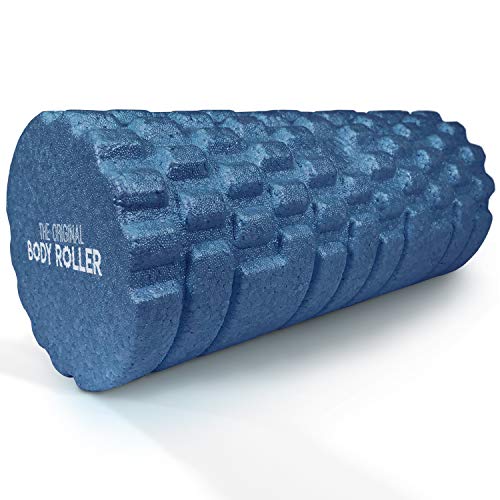
The Original Body Roller, High Density
This one is pitched as a high-density foam roller massager for the back and leg muscles, and its title references self-myofascial release for deep tissue work. It is a straightforward cylinder for athletes who like firm, predictable pressure and do not want gadgets or add-ons. Check the listing for the exact length and diameter, since the visible title does not state them.
- Strength: high-density construction is aimed at back and leg work, covering most post-workout needs.
- Strength: a simple shape means no learning curve and easy cleaning after sweaty sessions.
- Trade-off: firm foam can feel intense for beginners, so start with light body weight.
Skip it if you prefer a softer feel, textured contact points, or a kit that includes extra tools.
Which One Fits Your Situation
You run, and your legs need attention first
The Basics 18-inch roller is a sensible starting point. It spans both legs, packs easily, and its firm foam suits quads, hamstrings, and glutes after a long run. If calves are your trouble spot, add the Fitizen mini later. Runners who log most of their miles before work will also appreciate that a plain cylinder takes no setup: roll it out on the bedroom floor, spend a few minutes on each leg, and put it back in the closet.
You travel with a team or a gym bag
Reach for the TriggerPoint Grid 1.0. Its 13-inch length slides into duffels and carry-ons, and the multi-density surface gives you variety without extra gear. Tournament weekends, away games, and hotel gyms are exactly where a compact roller earns its place, because a full-size cylinder is rarely worth the airline baggage hassle.
You are new to rolling and sensitive to pressure
The 321 STRONG 3-Zone roller offers medium density and a way to adjust how firm it feels. Start gently, keep sessions short, and build up as your tolerance improves. Lifters coming back after a layoff, or older recreational athletes who dislike harsh pressure, often do better with a forgiving tool than with the firmest cylinder on the shelf, and the zone design gives you room to grow into more pressure over several weeks.
You want a whole-body setup at home
Consider the Krightlink 5-in-1 set if you have none of the accessories, or pair the Basics 36-inch roller with a ball if you prefer long-axis positions. Either way, plan a regular spot in your home where the gear stays visible.
Common Mistakes
- Buying the firmest roller available when you are new to rolling, then avoiding it because it feels harsh.
- Choosing a long roller without measuring the floor space you actually have.
- Paying for a multi-piece kit and never using the extras.
- Rolling directly over joints or any area that feels sharp or unusual instead of working the muscle around it.
- Expecting a roller to replace medical advice when discomfort lingers for weeks.
Related guides
- Adjustable Basketball Hoops For Driveways
- Weighted Jump Ropes For Conditioning
- Soccer Rebounders For Solo Practice
Frequently Asked Questions
How long should a recovery session with a roller last?
Many people spend roughly ten to fifteen minutes after a workout, moving slowly over each major muscle group. There is no official rule, so adjust based on comfort and your coach or clinician’s advice.
Is a longer roller always better?
No. A long roller supports lengthwise spine work, but a short one fits a bag and targets legs well. Match the length to where you plan to use it most.
Do textured rollers work better than smooth ones?
They feel different rather than automatically better. Textures concentrate pressure in narrower lines, which some people prefer and others find too intense. Start smooth if unsure.
Can a foam roller replace stretching?
They serve different purposes, and many routines include both. Rolling is a form of self-massage, while stretching works through a joint’s range. Ask a trainer or clinician if you have a specific injury.
More from Amazon
Programs that pair well with the guide above. Offers and eligibility are set by Amazon and may change.
Free shipping on eligible items, Prime Video and more. Eligible new members can start with a free trial.
Start a Prime free trialAudiobooks and podcasts to listen to on the go. Eligible new members can start with a free trial.
Try Audible freeAd-free music streaming. Eligible new subscribers can start with a free trial.
Try Music Unlimited freeA free business account with business pricing and bulk-buying tools for work, shop or home office.
Create a business accountAs an Amazon Associate we earn from qualifying purchases.

Write Your Review
No reviews yet. Be the first to share your experience!