

Key takeaways
- Eight backyard baseball pitching nets compared from listing details: seven 7x7 ft bow and steel frame nets with strike zones plus a 5x3 ft pitch-back rebounder.
The best all-round backyard pitching net on this list is a 7×7 ft frame with a printed strike zone, and there are six other nets of the same size, so the decision comes down to extras: BAGAIL and the black Ameritco include a tee, GoSports adds a carry bag, and PowerNet and YeahChi keep it simple. If you want something that sends the ball back, the 5×3 ft GoSports rebounder is the only one of that type. Everything here is described from listing titles and manufacturer details.
Which net suits which yard
Our top picks


As an Amazon Associate we earn from qualifying purchases at no extra cost to you.
- Pitching and hitting in one kit: BAGAIL 7×7 with tee, Ameritco 7×7 with tee
- Pitching only, strike zone: YeahChi, GoSports 7×7, Ameritco red
- Quick carry and storage: GoSports 7×7 with bag, LOMGWAYS steel frame with bag
- Solo practice with ball return: GoSports 5×3 Rebounder
The eight nets compared
| Model | Key point from title | Best for |
|---|---|---|
| YeahChi 7×7 | Strike zone target, bow frame | Pitching |
| PowerNet 7×7 (Red) | Pitching and batting practice | Simple setup |
| BAGAIL 7×7 | Tee, 2 zones, 7-ply mesh | Hit and pitch |
| Ameritco 7×7 (Black) | Tee and target, large pocket | All-round use |
| GoSports 7×7 | Bow frame, carry bag, strike zone | Portability |
| LOMGWAYS 7×7 | Steel frame and bag, indoor/outdoor | Budget buyers |
| GoSports 5×3 Rebounder | Pitch-back return, strike zone | Solo throws |
| Ameritco 7×7 (Red) | Strike zone, large pocket | Pitching and throwing |
Net by net
YeahChi 7×7 FT Baseball Net with Strike Zone Target
A bow-frame 7×7 net with a strike zone target and a stable base. The title says baseball and softball for all ages and skill levels. Second-cheapest of the 7×7 group on price, it makes a straightforward first net, and a good test of whether your player will stick with pitching. The listing gives no mesh ply, so check the details before you order, and look at how the base is anchored if your yard is windy.
- Pros: Strike zone included; bow frame; low price
- Cons: No mesh thickness in title; no tee
Who it’s for: Families starting with a basic pitching target.
PowerNet Baseball and Softball Practice Net 7×7 FT (Red Net)
The title is plain: a 7×7 practice net for pitching and batting, in red. No strike zone is named, so you may need to add your own marker. It costs more than every other 7×7 on this list, and the title lists fewer accessories than the cheaper ones, so the extra money is not buying extras you can see. Check the product page for frame and mesh details to see what the difference is.
- Pros: Pitching and batting use; recognisable brand
- Cons: No strike zone or tee named; higher price
Who it’s for: Buyers who want a no-frills net and will add their own target.
BAGAIL 7×7 ft Training Net with Batting Tee and 2 Strike Zones
The title lists a batting tee, two strike zones, a heavy-duty frame, 7-ply mesh and a quick two-minute setup. Two zones help when switching between pitching and hitting. The setup time is the seller’s claim, so allow longer on the first go. Ask yourself whether you need the second zone: it is most useful when two players of different height share the net.
- Pros: Tee included; two zones; 7-ply mesh
- Cons: Setup time unverified; tee quality not described
Who it’s for: A player who pitches and hits and wants one kit.
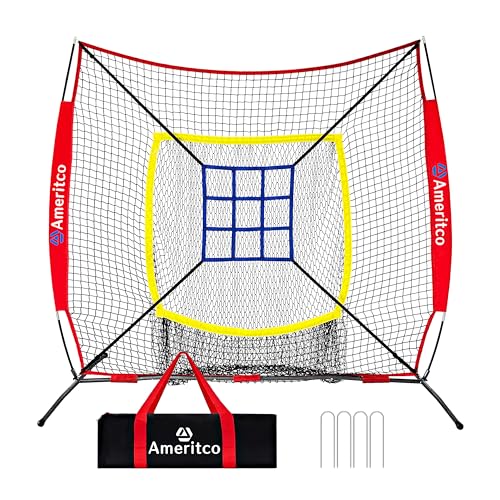
Ameritco Baseball Net, 7×7 ft with Tee and Target (Black)
This Ameritco comes with a tee and a target and has a large pocket and a scratch-resistant base. The title lists hitting, batting, pitching and throwing. It costs a little more than BAGAIL. The title has some formatting quirks, so read the product page carefully for exact dimensions and what the tee is made of.
- Pros: Tee and target; scratch-resistant base; versatile
- Cons: Messy title formatting; mid-range price
Who it’s for: Multi-sport households that throw, hit and pitch.
GoSports 7 ft x 7 ft Baseball and Softball Practice Net
The title includes a bow-type frame, carry bag and strike zone. The bag makes it easy to store between sessions. GoSports shows up twice on this list, here and in the rebounder below, and the 7×7 is the better fit for a wider range of drills. Look at the bag details on the listing, because a bag that is too small is the reason many nets end up in the garage unfolded.
- Pros: Carry bag; strike zone; baseball and softball
- Cons: No tee; price above the budget models
Who it’s for: Parents who need to put the net away after each session.
LOMGWAYS 7x7FT Portable Net with Steel Frame and Bag
The cheapest listing in the group. The title says steel frame, bag, indoor and outdoor use, and a large practice area. It does not mention a strike zone. As with any low-cost option, read the assembly details carefully and check the pole thickness on the listing. The title calls out both indoor and outdoor use, which may matter in a garage or on a covered patio. Do not use hard baseballs indoors unless the listing says the net is built for them.
- Pros: Lowest price; steel frame; bag
- Cons: No strike zone named; limited detail in title
Who it’s for: Budget buyers who will add their own target.
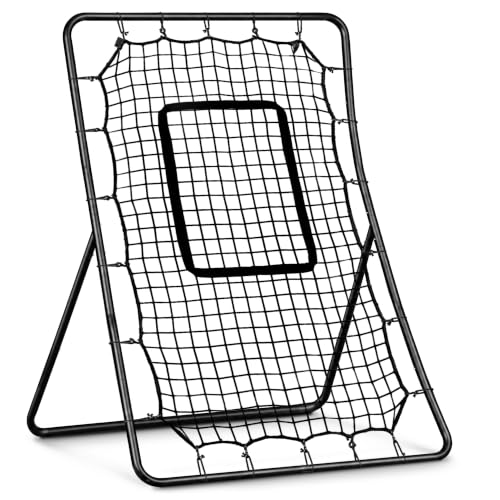
GoSports 5 x 3 ft Pitching and Fielding Rebounder (Pitch Back)
Not a catch net: this is a pitch-back, meaning the ball bounces back toward the thrower. The title says pitching and fielding with a strike zone. It suits a solo player who does not want to chase balls, though the 5×3 size has less room for error and may not suit every kind of throw. Fielding drills with a rebound are the main appeal: a ground ball back to the glove saves a partner. It will not catch a wild throw the way a 7×7 backstop does.
- Pros: Returns the ball; works for fielding practice; small footprint
- Cons: Small target; not a backstop for wild throws
Who it’s for: A single player working on accuracy.
Ameritco 7x7ft Baseball Net with Strike Zone (Red)
The red sibling to the black Ameritco, but with a strike zone listed and no tee named in the title. It has a large pocket and a scratch-resistant base, and the title says indoor/outdoor. Choose it if the tee version is more than you need, and confirm the colour you want, since the red and black listings are separate products with separate prices.
- Pros: Strike zone; large pocket; indoor/outdoor
- Cons: No tee named; similar to the black version
Who it’s for: Pitchers who already own a tee.
How the list came together
We worked from listing titles, published specifications, manufacturer documentation and buyer reviews, and kept every net that is clearly a pitching or practice net. Two Ameritco listings are separate products with different features, so both appear. The rebounder stays because its title names pitching. Where several nets share a size, we compare only what the titles actually state. Nobody on the team used or measured these units, and any setup times quoted come from the sellers.
Choosing a net for your yard
Frame type and base
Bow frames and steel frames both fold for storage, but they fold in different ways, so read how each one collapses before you decide where it will live. A stable base matters outdoors, where wind can push a light net. Look for a base that lies flat and can be staked or weighted. If your yard is mostly hard dirt or concrete, check that the feet will not slide.
Strike zone and target size
A printed zone is useful only when it sits at the right height. Most players start by aiming at the middle of the zone and widen the target as control improves. Listings with two zones, like the BAGAIL, let you switch between left- and right-handed hitters or between two heights.
Mesh and the pocket
Thicker mesh stands up to harder throws; the BAGAIL title mentions 7-ply. A deep pocket slows the ball and stops it dropping at the net’s foot. Check whether the listing says the net is built for baseballs or only softballs.
A yard-fit worked example
Say your lawn is 60 ft long and your league pitches from 46 ft. Put the pitcher about 4 ft in from one end, then place the net 46 ft away at the 50 ft mark. That leaves roughly 10 ft behind the net for a ball that gets through, and 4 ft behind the pitcher. If the numbers do not work, shorten the drill distance instead of putting the net against a fence or a window. Check your league’s rules for the right distance.
Weather and storage
Sun and rain wear netting down over time. Bring the net in after sessions if you can, rinse off dirt and let it dry before folding. A carry bag is not a luxury: it is what protects the net between seasons. Check each listing for water-resistance wording before you leave one outside.
Safety placement
Keep windows, cars and people out of the line of fire and outside the net’s side margins. Younger players should have an adult watching. Do not throw at a damaged net or a net with a bent frame.
Ten-minute setup check
- Lay out the frame and check every joint before attaching the net
- Stake or weight the base on soft ground
- Tie off any slack mesh so balls do not roll underneath
- Place the strike zone at the pitcher’s chest-to-knee range
- Walk the area behind and beside the net for hazards
Mistakes buyers make
Buying the smallest net to save money, then chasing every miss, is the most common mistake. Others include ignoring wind, which can lift a light frame, skipping a safety check of the area behind the net and assuming that any strike zone is the right height for your pitcher. Check height settings against your player, and consider a heavier base for open lawns. A less obvious mistake is mixing up softball and baseball: if your player pitches a softball, confirm the net suits it before you buy. Last, do not forget that nets wear out; replace one with sagging mesh or loose connections.
Verdict
For a family that hits and pitches, the BAGAIL or the black Ameritco covers the most ground in one purchase. For pitching only, YeahChi and GoSports give a clear strike zone at a modest cost. A solo player who hates chasing balls should consider the GoSports rebounder alongside, not instead of, a full net. Whatever you buy, set it up on a flat, clear piece of lawn, measure the distance, and check the product page for the exact dimensions.
Questions readers ask
What size net is best for backyard pitching?
Seven of the eight listings here are 7×7 ft, which gives a generous target for a young pitcher and enough width to catch a wild throw. A 5×3 ft rebounder is smaller and meant for returning the ball. Measure your yard first, since a bigger net also needs more clearance on each side and behind it.
Is a net with a strike zone better than one without?
For pitching practice, a strike zone target gives instant feedback on whether the ball is landing in the right area. Most of these listings include one or two zones. A plain net is fine for batting or throwing drills. Remember that a printed zone only helps if you align it with the correct height for the pitcher or batter.
Can these nets be used for softball as well?
Most titles say baseball and softball, including the PowerNet, GoSports, LOMGWAYS, YeahChi and BAGAIL listings. Softballs are larger than baseballs, so check the mesh opening on the listing page. The two Ameritco titles say baseball only, so confirm with the seller before using one for softball. If you want to use a net for both sports, buy one that lists both.
Is a net with a built-in tee necessary?
Only if you plan to hit as well as pitch. The BAGAIL and one Ameritco listing say they include a tee, which saves a purchase. For a pitching-only setup, a net without a tee costs less. A tee in the box is handy but check how stable it is, since a light tee tips in wind.
How far from the net should the pitcher stand?
Use your league’s pitching distance for the age group, then add a safety margin behind the net so a miss has somewhere to go. Younger players throw from shorter distances than older ones. Check your league’s rulebook for the exact number, and keep people and windows out of the line of fire.
Related guides
- Adjustable Basketball Hoops For Driveways
- Weighted Jump Ropes For Conditioning
- Soccer Rebounders For Solo Practice






Write Your Review
No reviews yet. Be the first to share your experience!