

Key takeaways
- Middle blockers and hitters (frequent net landings): a structured brace with side stabilizers or a rigid shell, such as the Active Ankle T2 or Eclipse II, according to volleyball-focused reviewers.
- Liberos and defensive specialists: a slim lace-up or a sleeve that does not restrict quick lateral steps.
- Players returning from a sprain: a lace-up with straps, chosen with the advice of a physician or physical therapist.
- Players who want light preventive support: a compression sleeve or a minimalist strap brace.
For most volleyball players, a lace-up brace with a figure-eight or figure-six strap system, such as the McDavid Ultra Light or the Active Ankle T2, gives the best balance of support and mobility, while players who only want light protection or have no injury history can use a low-profile sleeve like the Active Ankle 329. Middle blockers who land near the net on a teammate’s or opponent’s foot tend to benefit from a stiffer, more structured design, and back-row players who need quick lateral movement often prefer something slimmer. This guide covers which braces suit which role, what the makers state, fit and shoe notes, and how to choose by budget.
Our top picks

As an Amazon Associate we earn from qualifying purchases at no extra cost to you.
Quick Answer: Which Brace for Which Volleyball Player
- Middle blockers and hitters (frequent net landings): a structured brace with side stabilizers or a rigid shell, such as the Active Ankle T2 or Eclipse II, according to volleyball-focused reviewers.
- Liberos and defensive specialists: a slim lace-up or a sleeve that does not restrict quick lateral steps.
- Players returning from a sprain: a lace-up with straps, chosen with the advice of a physician or physical therapist.
- Players who want light preventive support: a compression sleeve or a minimalist strap brace.
Anyone who has had an ankle injury, has persistent swelling, or feels instability should see a doctor or physical therapist before choosing a brace. A brace is a support aid, not a treatment, and it does not replace medical care or rehabilitation.
At a Glance: Volleyball Ankle Braces Compared
| Model | Style | Best for | Stated or reported features | Limits |
|---|---|---|---|---|
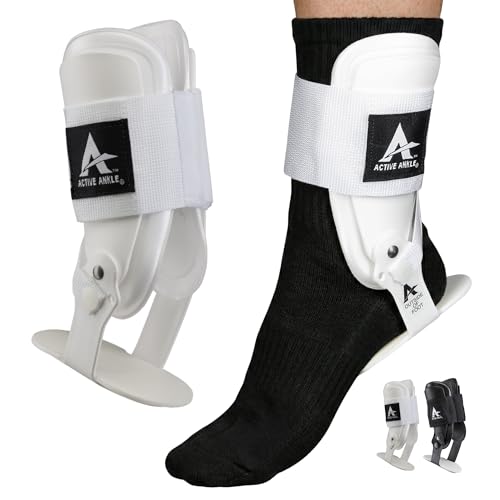
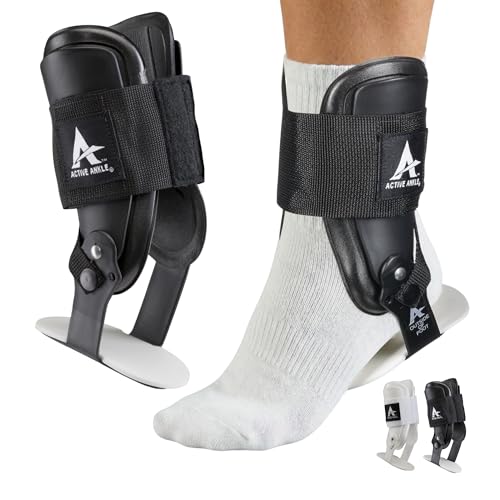
| Active Ankle T2 | Rigid-shell lace-up | Hitters and blockers wanting firm side-to-side support | Reviewers describe a U-shaped rigid shell and a lace-up closure | Bulkier; takes shoe room |
| Active Ankle Eclipse II | Stirrup-style with laces | Middle blockers | Volleyball reviewers single it out for blockers | Stiffer feel; slower to put on |
| Active Ankle Ultra Zoom | Lace-up with straps | All-around players | Named by one reviewer as a default volleyball choice | Mid-level bulk |
| Active Ankle AS1 Pro | Lace-up | Back-row players | Recommended by one roundup for the back row | Less rigid than shell designs |
| Active Ankle 329 | Sleeve | Comfort, light support | Reviewers point to it for comfort and back-row play | Least structural support |
| McDavid Ultra Light | Lace-up with figure-six straps | High-impact, quick-cut sports | Garage Gym Reviews names it its best overall; the maker describes a lightweight design | Needs correct lacing and strapping |
| McDavid 195 / 199 | Lace-up | Value lace-up support | Listed by DME-Direct and other reviewers | Less cushioning than premium options |
| Mueller adjustable and Hg80 | Neoprene or strap designs | Entry-level or occasional use | Reviewers treat them as budget picks | Less rigid support for cutting and landing |
Why Volleyball Ankles Get Injured
Most volleyball ankle injuries occur on landing. A hitter or blocker comes down near the net, steps on another player’s foot, and the ankle rolls inward. Sports-medicine groups commonly describe this as an inversion sprain. A brace is intended to limit the extreme range of motion without blocking jumps, which is why volleyball reviewers tend to favor lace-ups and structured braces over soft wraps for front-row players.
Evidence on braces generally suggests they may help reduce repeat sprains in people who have already had one, though how much depends on the person. Players should not read any brace listing as a promise of injury prevention. Physical therapists often add balance and strength work alongside bracing.
Brace Styles Explained
Rigid-shell and stirrup braces
Active Ankle’s T2 is a frequently cited example. Reviewers describe a rigid, U-shaped shell that sits along the sides of the ankle, held on with laces and a strap. The firm sides are intended to resist rolling. The trade-offs are bulk and shoe fit. Players often need to size up in their court shoe or choose a lower-profile model.
Lace-up braces with figure-eight straps
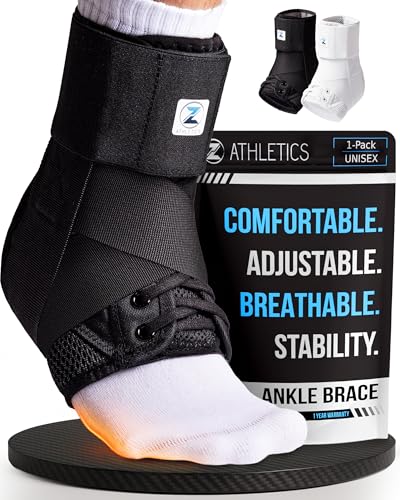
These resemble traditional athletic taping. The McDavid Ultra Light is a common example, and Mueller’s strapping designs use similar patterns. The lace-up gives adjustable compression, and the straps are meant to mimic the criss-cross of tape. Because the player adjusts them, fit depends on technique. A loose strap offers less support, while an overtight one can cause discomfort or tingling.
Compression sleeves
Sleeves such as the Active Ankle 329 provide light compression and warmth. They are comfortable and slim, which is why reviewers connect them with back-row play. They offer limited mechanical restriction, so they suit players who want a reminder and light support rather than structure.
Semi-rigid hinged or stabilizer braces
Medical-style braces such as the Med Spec ASO and the Aircast AirSport appear in reviews. They are often used after injury. Players recovering from a sprain should ask a clinician which type suits them rather than choosing from a list.
Fit, Sizing and Shoe Compatibility
- Sizing: Makers size by shoe size or ankle circumference. Use the chart on the maker’s page and measure rather than guess.
- Shoe room: Many players wear court shoes that are a half size larger when using a bulky brace. Low-profile lace-ups and sleeves leave more room.
- Socks: Wear the same sock thickness you play in when fitting. Thin socks can cause rubbing under straps.
- Left and right: Some braces are sold individually and are not interchangeable. Read the listing.
- Break-in: New braces often feel stiff. Wear them in practice before using them in a match.
- Rules: Some leagues restrict hard shells or require covering. Ask the coach or league if unsure.
Care and Safety Notes
Hand-wash braces according to the maker’s care label and air dry them. Heat from a dryer can distort straps and shells. Replace a brace if the stitching frays, the laces stretch, or the shell cracks. Stop using a brace and see a clinician if you notice numbness, color change in the toes, increased swelling, or pain that worsens. A brace should not be worn tighter than the maker instructs.
Budget Tiers
| Tier | Typical choices | Trade-offs |
|---|---|---|
| Budget | Mueller adjustable and neoprene sleeve styles | Lighter support, shorter lifespan, less suited to heavy front-row use |
| Mid-range | McDavid 195 or 199, Active Ankle 329, AS1 Pro | Good support balance; fit depends on technique |
| Premium | McDavid Ultra Light, Active Ankle T2, Eclipse II, Ultra Zoom, medical-style braces | Firmer support and better construction; more bulk and a longer break-in |
Pick X If… Decision Table
| Pick this | If you… |
|---|---|
| Active Ankle T2 | want a rigid shell and play at the net |
| Active Ankle Eclipse II | are a middle blocker needing structured side support |
| McDavid Ultra Light | want a lightweight lace-up with figure-six straps |
| Active Ankle AS1 Pro | play back row and want a slimmer lace-up |
| Active Ankle 329 sleeve | want comfort and light support without bulk |
| Mueller adjustable brace | need an inexpensive option for occasional use |
| Medical-style brace such as Aircast AirSport or Med Spec ASO | are returning from an injury and have clinician guidance |
Putting a Brace On Correctly
Even a well-made brace performs poorly if it is applied badly. Sit with the knee bent and the foot flat, loosen all laces, slide the foot in and seat the heel at the back of the brace. Lace from the toes upward so the tension is even, then fasten the straps in the order the maker shows, usually across the front and around the heel. The brace should feel snug and supportive without cutting off circulation. Many players redo the laces after a few minutes of warm-up because fabric settles as the foot warms. Repeating this routine before every practice keeps the support consistent and helps the brace feel like part of the shoe rather than an afterthought.
Alternatives
- Athletic taping: Trainers can tape ankles, though tape loosens during play and needs skill to apply. A trainer or physical therapist can advise.
- Balance and strength training: Single-leg balance work is a common preventive routine that physical therapists teach. It does not require equipment.
- High-top court shoes: Some players add ankle support through footwear, though shoe height alone is not a guaranteed substitute for a brace.
Frequently Asked Questions
Can an ankle brace prevent sprains?
A brace may help limit extreme ankle motion, and bracing is commonly discussed for people who have sprained before. No brace guarantees protection. Strength, balance and good landing habits matter too, and a physical therapist can tailor advice.
Will a brace slow my jumping?
Some players notice stiffness at first, especially with rigid shells. Lighter lace-ups and sleeves restrict movement less. Most reviewers say a break-in period helps, and practicing in the brace before a match is wise.
Do I need to wear a brace on both ankles?
Not necessarily. Many players brace only the ankle they have injured before. A coach, trainer or clinician can advise whether bracing both makes sense for a given player.
Which is better, a sleeve or a lace-up?
A lace-up generally provides more adjustable support, while a sleeve offers comfort and light compression. Players recovering from a sprain tend to choose lace-ups, though clinical advice should drive that choice.
Do braces fit inside volleyball shoes?
Most do, though bulky models may require a half size up or a lower-profile shoe. Sleeves and slim lace-ups leave the most space. Try the brace with the shoe and sock you will play in.
When should I see a doctor instead of buying a brace?
See a doctor or physical therapist if you have significant swelling, pain bearing weight, repeated giving way, numbness, or a recent injury that has not been assessed. A brace is not a substitute for diagnosis.




Write Your Review
No reviews yet. Be the first to share your experience!