

Key takeaways
- Find the best gym flooring for your home gym, from budget EVA puzzle tiles to thick rubber-top mats. Compare coverage, thickness and durability first.
The best gym flooring for most home gyms is the BalanceFrom EVA Interlocking Foam Exercise Tile Mat: it covers 48 square feet with twelve interlocking tiles at the lowest cost per square foot of any mat in this guide, with a half inch of cushioning for bodyweight work, stretching, and light dumbbells. If your training is heavier, step up to a rubber-top mat such as the SUPERJARE 0.56 inch set or the thicker AIRHOP 0.79 inch set, which put a tough rubber surface over dense foam. This guide covers flooring for a room or a training zone, not single-person exercise mats, and every pick below lays down, rearranges, and expands without glue or tools.
Table of Contents
- How to Choose Gym Flooring
- 1. BalanceFrom EVA Interlocking Foam Exercise Tile Mat
- 2. ProsourceFit Exercise Puzzle Mat
- 3. SUPERJARE Rubber Top Exercise Equipment Mats
- 4. AIRHOP Exercise Equipment Mats
- 5. bemaxx Gym Mats Set
- Which Gym Flooring Should You Buy
- FAQ
- Conclusion
- Product and ASIN Reference
How to Choose Gym Flooring
Start with what happens on the floor. Bodyweight training, yoga, stretching, and light dumbbells are gentle on flooring, so a half inch of high-density EVA foam is plenty. Heavy lifting changes the calculation: dropped plates, a loaded barbell, and a rack that never moves all punish soft foam, so you want a rubber top or a thicker profile.
Thickness is the next decision. A half inch is the standard baseline: it cushions knees and elbows, quiets footfalls, and protects hard floors from scuffs. Thicker mats add protection for heavy equipment and dropped weights, but they also add weight, cost, and a taller step onto the training surface. Thinner mats around four-tenths of an inch work for light use and for protecting a floor under a machine, but they are not a lifting surface.
Coverage matters as much as thickness. Measure the zone you actually train in, not the whole room, and add a little extra around the edges. A single rack and bench need roughly 48 square feet. A compact corner for stretching and dumbbells can work with 18 to 24 square feet. Interlocking tiles make coverage easy to adjust: buy one set now and add a second later if the zone grows.
Material decides durability and feel. EVA foam is light, soft, and easy to cut and rearrange, which is why it dominates budget gym flooring. Its weakness is compression: heavy plates and rack feet can leave dents over time. Rubber-top mats solve that with a tough textured surface bonded to a foam base, giving you grip and impact resistance on top and cushioning underneath. Solid rubber rolls are the most durable option of all, and the hardest to install.
Check the details before you order. Confirm the tile size, the thickness, the number of tiles, and whether end borders are included, because listings for the same mat often sell several sizes under one title. Confirm the exact color and coverage variant too. Listings change, so verify the size, color, and availability on the listing itself before you buy.
1. BalanceFrom EVA Interlocking Foam Exercise Tile Mat
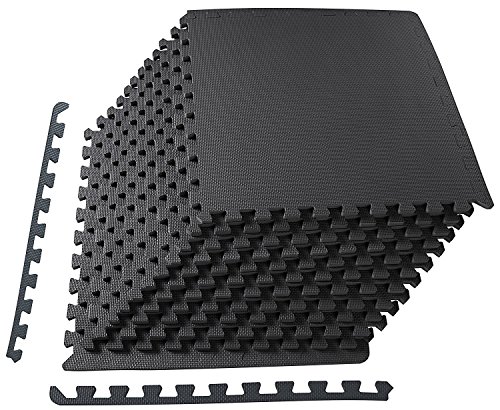
Best for: Covering a large home gym floor on a budget
Tier: Budget
The BalanceFrom mat is the value pick in this guide. Twelve tiles cover 48 square feet, enough for a rack, a bench, and room to move, and an independent comparison found it the lowest cost per square foot on its shelf. Each tile measures 24 by 24 inches and a half inch thick, and twenty-four end borders come in the box, giving the finished edge a clean look.
The foam is high-density EVA with a non-slip surface on both faces, so the tiles grip the floor below and your feet above. At six pounds for the whole set, the tiles are light enough to pick up and rearrange in minutes, which suits a shared room that doubles as a gym. The surface feels forgiving for stretching, floor work, and bodyweight circuits.
This is not a mat for heavy dropping: a loaded barbell or a stack of plates can compress the foam over time, so keep the heaviest work on a rubber-top mat or a dedicated platform. The listing carries a California Proposition 65 notice, so read it on the listing if that matters to you. For everyone else, it is the cheapest honest way to turn a bare floor into a training floor.
Specs
- Coverage: 48 square feet, 12 tiles
- Tile size: 24 x 24 inches
- Thickness: 1/2 inch
- Material: High-density EVA foam, non-slip on both faces
- End borders: 24 included
- Set weight: 6 lb
- Color: Black
- Part number: BFPM-2PKBLK
2. ProsourceFit Exercise Puzzle Mat
Best for: A small training corner or a first set of gym flooring
Tier: Budget
The ProsourceFit puzzle mat is the small-space pick. Six tiles cover 24 square feet, enough for a stretching zone, a dumbbell station, or the floor under a single machine, and the set is the most affordable way to try interlocking gym flooring before committing to a full room. The tiles are 24 by 24 inches and a half inch thick, the same standard size as the larger sets, so you can add more tiles later and everything still lines up.
The mat is high-density EVA foam with a non-skid surface and water-resistant construction, so sweat and spills wipe off and the tiles do not slide around during a workout. The puzzle edges lock tightly, and the tiles are light enough to pull up, stack, and store when the room needs to serve another purpose. Larger sets in the same line cover 48 and 144 square feet.
Choose this set when the training zone is small or you are building a gym one piece at a time. It cushions knees and elbows, protects hardwood and concrete from scuffs, and quiets a workout in a shared home. It is not the pick for a rack loaded with plates: pair it with a rubber-top mat in the lifting zone and keep the ProsourceFit tiles where the work is lighter.
Specs
- Coverage: 24 square feet, 6 tiles
- Tile size: 24 x 24 inches
- Thickness: 1/2 inch
- Material: High-density EVA foam, non-skid surface
- Water resistance: Water-resistant, easy to clean
- Color: Black
- Model: ps-2301-pzzl-black
3. SUPERJARE Rubber Top Exercise Equipment Mats

Best for: A mid-range mat that handles weights better than plain foam
Tier: Mid-range
The SUPERJARE set is the step up from plain foam. Each tile has a rubber top bonded to a high-density EVA foam base: a tough, textured surface that resists scuffs and dents on top, cushioning underneath. Twelve tiles cover 48 square feet, which fits a rack and bench with room to spare, and the interlocking edges keep the layout tight under shifting feet and rolling equipment.
The 0.56 inch thickness sits just above the half inch standard, giving a little extra protection without the taller step of a three-quarter inch mat. The listing states a maximum load of 500 pounds per tile, a useful guardrail that says this mat is built for real equipment, not just floor exercises, though no foam mat replaces a proper lifting platform under a dropped barbell.
The listing flags a newer, thicker version of this same mat, so check which thickness you are selecting before you order. The 0.56 inch set is the balanced choice: thick enough for weights and machines, thin enough to stay stable underfoot, and priced in the middle of this guide.
Specs
- Coverage: 48 square feet, 12 tiles
- Tile size: 24 x 24 inches
- Thickness: 0.56 inch
- Material: Rubber top with high-density EVA foam base
- Maximum load: 500 lb per tile
- Color: Black/Grey
4. AIRHOP Exercise Equipment Mats

Best for: The thickest, most protective mat in this guide
Tier: Premium
The AIRHOP 0.79 inch set is the premium pick, and the thickness is the reason. At nearly four-fifths of an inch, it is the thickest mat here, and that extra depth absorbs more impact from dropped dumbbells, heavy footwork, and equipment that stays parked in one spot. Like the SUPERJARE set, it pairs a textured rubber top for grip and durability with a high-density EVA foam base for cushioning. Twelve tiles cover 48 square feet.
The Black and White colorway is the distinguishing detail. Most gym flooring is solid black, so the two-tone tiles let you lay out a pattern or mark zones, such as a lifting area in one color and a stretching area in the other. The tiles are 24 by 24 inches, so they line up with the other sets in this guide if you mix and match.
Thicker is not better for everyone. A 0.79 inch mat has a taller edge to step over, and heavy racks can settle into it more than they would on a thinner mat, so check that your rack feet sit flat before you load the bar. For a dedicated lifting zone, though, this mat takes the most punishment.
Specs
- Coverage: 48 square feet, 12 tiles
- Tile size: 24 x 24 inches
- Thickness: 0.79 inch
- Material: Rubber top with high-density EVA foam base
- Color: Black & White
- Model: AH-GF001
- Manufacturer part number: AH-GF1-20-BK-WH-12PCS
5. bemaxx Gym Mats Set

Best for: Small spaces, under-equipment protection, and tight budgets
Tier: Budget
The bemaxx set takes a different approach: eighteen small tiles instead of a few large ones. Each tile is 12.6 by 12.6 inches and four-tenths of an inch thick, and the set covers 18 square feet, the right size for the floor under a treadmill, a bike, or a single bench, or for a compact corner where a full 24 inch tile would need cutting. Edge pieces come in the box, so the finished border is straight and tidy.
Small tiles shine in awkward spaces. They fit around door frames, under low furniture, and into corners where a large tile would leave gaps, and a single damaged tile is cheap to replace, since you swap one small square. The EVA foam is BPA-free, with an anti-slip surface that keeps the mat in place and damps noise and vibration from equipment.
The trade-off is thickness. At four-tenths of an inch, this is the thinnest mat in the guide, so it is not the pick for heavy lifting or dropped weights. Use it where the job is protection and cushioning: under machines, in a stretching corner, or as a play and exercise surface for light work. For that job, it is hard to beat.
Specs
- Coverage: 18 square feet, 18 tiles
- Tile size: 12.6 x 12.6 inches
- Thickness: 0.4 inch
- Material: EVA foam, BPA-free, anti-slip surface
- Edge pieces: Included
- Model: BM-PM1
Which Gym Flooring Should You Buy
Buy the BalanceFrom 48 square foot set for the most floor for the least money, the ProsourceFit 24 square foot set for a small zone or a starter gym, the SUPERJARE 0.56 inch set when weights and machines share the floor, the AIRHOP 0.79 inch set for maximum protection in a dedicated lifting zone, and the bemaxx 18-piece set for small spaces or under a machine. Whatever you choose, measure first, confirm the exact size and thickness on the listing, and lay the tiles out dry before you lock them together.
FAQ
How thick should gym flooring be?
A half inch is the right baseline for most home gyms, covering bodyweight work, stretching, and light dumbbells with enough cushion for knees and floors. Go thicker, around three-quarters of an inch or more, for heavy lifting zones where plates and bars hit the floor. Thinner mats around four-tenths of an inch suit light use and under-equipment protection, but are not a lifting surface.
Is EVA foam or rubber better for a home gym?
EVA foam is lighter, softer, cheaper, and easier to rearrange, which suits general training and rooms that change use. Rubber, or a rubber top over foam, is tougher and resists dents and scuffs from heavy equipment, which suits racks, benches, and machines. Many home gyms use both: foam where the work is light, rubber-top mats where the weights live.
How much flooring do I need for a home gym?
Measure the zone you train in, not the whole room. A rack and bench need about 48 square feet, a compact corner works with 18 to 24, and a full room can need 144 or more. Start with one set and add another later.
Can gym flooring go over carpet or concrete?
Yes, with a caveat for each surface. Over concrete, interlocking tiles add the cushioning and insulation that bare concrete lacks, and they protect both your joints and the slab. Over carpet, a low, firm pile works better than a thick, soft one, and very plush carpet can let tiles shift or rock. In either case, check that they sit flat before you train on them.
Conclusion
The best gym flooring is the set that matches the work you do on it. The BalanceFrom 48 square foot set covers the most floor for the least money and suits most home gyms. The ProsourceFit 24 square foot set fits small spaces and starter gyms. The SUPERJARE rubber-top set and the thicker AIRHOP set handle weights and machines that plain foam cannot. The bemaxx small-tile set protects floors under equipment and in tight corners. Measure your zone, pick the thickness your training demands, and confirm the exact size and variant on the listing before you order.
As an Amazon Associate, we earn from qualifying purchases.
Product and ASIN Reference
| Item | ASIN |
|---|---|
| BalanceFrom EVA Interlocking Foam Exercise Tile Mat | B072MLTVS4 |
| ProsourceFit Exercise Puzzle Mat | B00B4IHXRU |
| SUPERJARE Rubber Top Exercise Equipment Mats | B09NHQQGKR |
| AIRHOP Exercise Equipment Mats | B0D3FCPGQ3 |
| bemaxx Gym Mats Set | B019DZDM3O |
More from Amazon
Programs that pair well with the guide above. Offers and eligibility are set by Amazon and may change.
Free shipping on eligible items, Prime Video and more. Eligible new members can start with a free trial.
Start a Prime free trialAudiobooks and podcasts to listen to on the go. Eligible new members can start with a free trial.
Try Audible freeAd-free music streaming. Eligible new subscribers can start with a free trial.
Try Music Unlimited freeA free business account with business pricing and bulk-buying tools for work, shop or home office.
Create a business accountAs an Amazon Associate we earn from qualifying purchases.








Write Your Review
No reviews yet. Be the first to share your experience!