

Key takeaways
- Learn how to choose running shoes for flat feet: arch support, heel drop, and stability features, plus five supportive shoes worth a look today.
Flat feet change the way a run feels from the very first stride. When the arch sits low or collapses inward with each landing, the foot tends to roll toward the inside, a motion runners call overpronation. That roll can pull the ankle, knee, and hip out of line, which is why many flat-footed runners notice sore arches, aching shins, or tired feet long before their legs feel tired. The right shoe does not cure flat feet, but it can steady the roll, spread impact more evenly, and make each mile feel smoother.
Shoe makers build a whole category of stability shoes aimed at exactly this problem. These models add structure under the arch, firmer foam on the inner side of the midsole, and a wider base that resists tipping. Choosing among them comes down to matching the level of support to the way your own feet move, then checking fit, heel height, and comfort at your normal running pace. This guide explains what to look for and walks through five running shoes for flat feet for different budgets and running styles.
As an Amazon Associate, we earn from qualifying purchases.
Quick answer
Look for a stability shoe with a firm medial post or guidance frame, a heel drop between 5 and 12 millimeters, and enough arch structure to keep the foot from rolling inward. Try shoes late in the day, leave a thumb width of space in front of the longest toe, and pick the pair that feels stable on a short jog.
How to choose
Start with how your foot moves
The simplest check is the wet foot test. Wet the sole of one foot, step onto a piece of cardboard or dark paper, and look at the print. A flat foot leaves a wide, almost full print with little curve on the inner edge. A print like that usually points toward a stability shoe rather than a neutral one. Runners with mild rolling can use a light stability model, while runners whose ankles collapse sharply at landing need a shoe with a stronger medial post or a full guidance frame.
Arch support that actually works
Arch support should feel like a gentle hand under the midfoot, not a hard lump pressing into it. Many stability shoes use a denser wedge of foam on the inner side of the midsole, which slows the inward roll without stopping natural motion. Others use a frame that runs along the heel and midfoot. Either approach can work. What matters is that the support engages as the foot loads, which you can feel during a short jog.
Heel drop and stack height
Heel drop is the height difference between the heel and the forefoot, and it changes how the foot strikes the ground. Low drops around 5 to 6 millimeters tend to suit runners who land midfoot, while higher drops around 10 to 12 millimeters shift more load toward the heel and often feel easier on the Achilles tendon. Stack height, the total amount of foam under the foot, adds cushioning but can also make a shoe feel less stable if it is very tall. For flat feet, a moderate stack with a wide platform usually gives the best balance of cushion and control.
Fit checks that matter
Sizing is the part runners get wrong most often. Running shoes should fit about half a size larger than everyday shoes, because feet swell during a run. Check the width too: many stability shoes come in wide versions, and a shoe that squeezes the midfoot will feel unstable no matter how good the midsole is. Lace the shoe snugly through the midfoot and looser over the toes, then jog. The heel should stay put, the arch should feel supported but not pressed, and the toes should be free to spread.
When to replace your shoes
Foam breaks down gradually, so support fades before the outsole shows obvious wear. A common guideline is to retire running shoes after roughly 300 to 500 miles, and sooner if the inner side of the heel starts to lean or the midsole feels compressed on one side. Runners who train on pavement or carry more body weight wear through support faster. Keeping a second pair in rotation makes it easier to notice when one pair loses its structure.
Brooks Adrenaline GTS 24
The Brooks Adrenaline GTS 24 is the classic pick for flat-footed runners who want dependable stability with a soft landing. Its GuideRails system uses firm foam on both sides of the heel to keep the foot moving in a straight line, which feels less intrusive than a hard medial post. The DNA Loft v3 midsole gives a smooth, cushioned ride, and the 12 millimeter heel drop suits heel strikers.
Key specs include a breathable engineered mesh upper, a wide base through the midfoot, and a segmented crash pad that eases the transition from heel strike to toe-off. A men’s size 9 weighs around 9.8 ounces, and the shoe comes in multiple widths, which helps runners with broader feet find a secure fit. The Adrenaline GTS 24 works well for daily training, long easy runs, and runners who want one pair that handles most of the week.
ASICS GT-2000 14

The ASICS GT-2000 14 brings a modern stability design to a long-running line. Its 3D Guidance System combines a firmer medial wedge with a wider midsole platform, guiding the foot through the stride rather than forcing it into place. FF BLAST PLUS cushioning keeps the ride lively for a stability shoe, and the 8 millimeter heel drop sits in the middle of the range, making it a flexible choice for heel strikers and midfoot strikers alike.
Key specs include a jacquard mesh upper that adapts to the shape of the foot, a durable AHARPLUS outsole, and reflective details for low light running. A men’s size 9 weighs around 9.5 ounces. The GT-2000 14 suits runners who want moderate support for everyday miles, tempo runs, and longer weekend efforts, and it pairs well with runners who are moving up from a neutral shoe and want a bit more guidance.
New Balance Fresh Foam X 860v14

The New Balance Fresh Foam X 860v14 is built for runners who need firm, structured support and plan to put in serious weekly miles. Its Stability Plane is a full-length medial support system that resists the inward roll across the whole stride, while Fresh Foam X cushioning softens each landing. The 10 millimeter heel drop gives a familiar, traditional feel, and the shoe carries the Seal of Acceptance from the American Podiatric Medical Association.
Key specs include a breathable engineered mesh upper, a dual-density midsole, and a blown rubber outsole for grip on pavement. A men’s size 9 weighs around 10.2 ounces, making it the sturdiest option in this group, and it comes in narrow, standard, wide, and extra wide fits. The 860v14 is a strong match for heavier runners, daily trainers, and anyone whose arch collapses noticeably at landing.
Saucony Guide 18

The Saucony Guide 18 takes a lighter, more flexible approach to stability. Its CenterPath Technology uses a broader platform and a higher sidewall to cradle the foot, while the PWRRUN midsole delivers a soft, responsive feel. The 6 millimeter heel drop is the lowest in this group, which appeals to runners who prefer a flatter ride and a more natural stride. A men’s size 9 weighs around 9.4 ounces.
Key specs include a breathable engineered mesh upper, a PWRRUN sockliner for extra cushioning under the foot, and a durable rubber outsole. The Guide 18 suits runners with mild to moderate overpronation who want stability without the stiff feel of a traditional motion control shoe. It works well for daily training, faster workouts, and runners who split time between road running and treadmill sessions.
HOKA Arahi 7
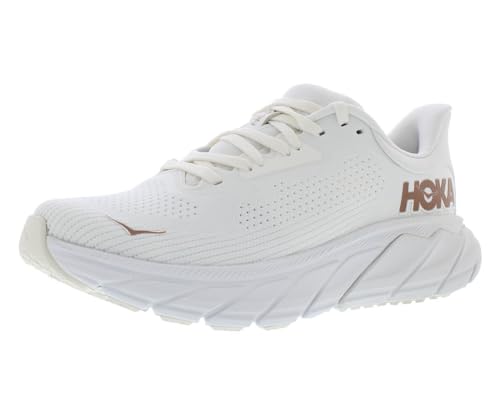
The HOKA Arahi 7 is the lightest stability shoe in this group and a good choice for runners who want support without bulk. Its J-Frame is a firmer band of foam that runs around the heel and along the inner edge of the midfoot, guiding the foot without adding a heavy post. The CMEVA midsole keeps the weight down, and the 5 millimeter heel drop gives a low, close-to-the-ground feel. A women’s size 8 weighs around 8.3 ounces.
Key specs include a flat knit upper with a plush tongue and collar, a durable rubber outsole with a zonal pattern, and a wide platform that adds stability at speed. The Arahi 7 suits runners with mild overpronation, lighter runners, and anyone who wants a stability shoe that still feels quick on tempo days. It also works well for walkers who cover long distances and want structured support.
Who should skip
Stability shoes are not for everyone. Runners with high arches who underpronate, rolling outward at landing, usually do better in a neutral cushioned shoe, because added medial support can push their feet further outward. Runners who already wear custom orthotics should check with their clinician before adding a stability shoe, since the two sources of support can overlap and change the feel underfoot. Anyone with ongoing foot pain that does not improve with rest and better shoes should see a medical professional rather than trying to fix the problem with footwear alone. Finally, runners who only run short distances on soft trails may find a stability road shoe heavier than they need.
FAQ
How do I know if I overpronate?
A wet foot test gives a rough answer: a wide, nearly full footprint points to a low arch and likely overpronation. A running store can also watch your stride on a treadmill and check how far your ankle rolls inward. If the inner side of your old shoes wears down faster than the outer side, that is another sign worth noting.
Can flat feet cause knee pain when running?
The inward roll of a flat foot can change the angle of the lower leg, which sometimes leads to discomfort in the knee, shin, or hip. Many runners find that a stability shoe, a gradual build in mileage, and strength work for the calves and hips help. Persistent pain deserves a visit to a clinician, who can check for issues beyond footwear.
Should I size up in stability running shoes?
Most runners benefit from about half a size more than their everyday shoes, because feet swell during a run. Leave a thumb width of space in front of the longest toe, and try the wider version if the midfoot feels squeezed. The right size should feel secure at the heel and roomy at the toes.
How long do stability shoes last?
Most running shoes hold their support for roughly 300 to 500 miles, depending on body weight, running surface, and weekly mileage. Replace them sooner if the heel leans inward when you set the shoe on a flat surface, or if the arch area feels flat and compressed. Rotating two pairs can help you spot the change more easily.
Final verdict
Choosing running shoes for flat feet starts with an honest look at how your foot moves, then matching support to that motion. The Brooks Adrenaline GTS 24 and New Balance Fresh Foam X 860v14 offer the strongest, most traditional stability in this group, while the ASICS GT-2000 14 sits in the middle with a versatile 8 millimeter drop. The Saucony Guide 18 and HOKA Arahi 7 are lighter options for runners who want guidance without a stiff feel. Whichever model you pick, take time with the fit, build mileage gradually, and replace your shoes before the support fades. Comfort and stability together turn flat feet from a problem into a detail you stop thinking about mid-run.
More from Amazon
Programs that pair well with the guide above. Offers and eligibility are set by Amazon and may change.
Free shipping on eligible items, Prime Video and more. Eligible new members can start with a free trial.
Start a Prime free trialAudiobooks and podcasts to listen to on the go. Eligible new members can start with a free trial.
Try Audible freeAd-free music streaming. Eligible new subscribers can start with a free trial.
Try Music Unlimited freeA free business account with business pricing and bulk-buying tools for work, shop or home office.
Create a business accountAs an Amazon Associate we earn from qualifying purchases.


Write Your Review
No reviews yet. Be the first to share your experience!