

Key takeaways
- Measure the throwing zone. Allow enough distance between the thrower and the rebounder for the return to arrive at a catchable speed, and keep the area free of obstacles.
- Use stakes or weight. Lightweight frames can tip or slide in wind. Use ground spikes where supplied.
- Guard against ricochets. A hard throw off a rigid target can bounce at odd angles. Keep windows and spectators out of the line of return.
- Cover or store it. Rain and sun age netting, springs and straps. One reviewer advises indoor storage or a cover for the Wolf Mini Wall.
- Inspect springs and cords. Look for stretched bungees, rust at joints and frayed netting before each session. Replace worn parts using the maker’s replacement list.
- Supervise young children. Frames with springs or tension cords can pinch fingers during assembly or adjustment.
For most players the best lacrosse rebounder is a steel-frame model with spring or high-tension return and adjustable angles, such as the STX Bounce Back Target, while a larger netted rebounder like the Zealfeel or Aceletiqs suits families who want a big target at a modest price and a small portable one such as the Wolf Mini Wall or FireThreads FireBounce suits tight spaces. Pick by how hard the player throws, how much room there is, and whether the rebounder stays up or gets stored.
Our top picks


As an Amazon Associate we earn from qualifying purchases at no extra cost to you.
Best Lacrosse Rebounders at a Glance
| Rebounder | Best for | Key stated specs | Limits |
|---|---|---|---|
| STX Bounce Back Target | Consistent return and durability | 3×4 ft target, rust-resistant alloy steel frame, high-tension springs, orange target | Heavy; assembly takes effort; sun can damage net straps |
| Wolf Athletics Mini Wall | Compact storage | 3×3 ft, about 30 lb, alloy steel, foldable, high-tension springs; one-year warranty reported | Smaller target; store indoors or cover it |
| All Ball Pro Stinger X | Frequent training and permanent setups | 47 inch diagonal screen, three angle positions, UV-protected fabric, powder-coated steel, 10 inch wheels, collapsible | Heavy and premium in cost |
| STX Multi-Position | All-round backyard use | 3×4 ft surface, steel frame, adjustable, double-sided for two players | Slower return; occasional off-center bounces |
| FireThreads FireBounce | Small yards and travel | About 88 by 71 cm frame, under 10 lb, three angles, ground spikes, setup under a minute | Small target; frame flexes on hard shots |
| Gladiator Wall Rebounder | Rigid frame, consistent bounce | Adjustable angle system as described by Peak Primal Wellness | Fewer maker details; check size on the listing |
| Aceletiqs 5×7 ft | Wide target | 5×7 ft, four positions, tool-free assembly | Legs do not fold in |
| Zealfeel 4×7 ft | Value and large target | Five angles, 56-ply HDPE netting, powder-coated steel frame | Slightly heavy to move alone |
| Rukket 4×7 ft | Built-in target | 4×7 ft, four angles, extra tension cords | Assembly can be tricky; legs do not fold |
Specs come from the LaxDrip rebounder roundup, SportStop’s backyard guide and other outlets named in the table. Where outlets give conflicting weights, such as for the STX Bounce Back, the maker’s listing should settle the figure.
How Rebounders Work
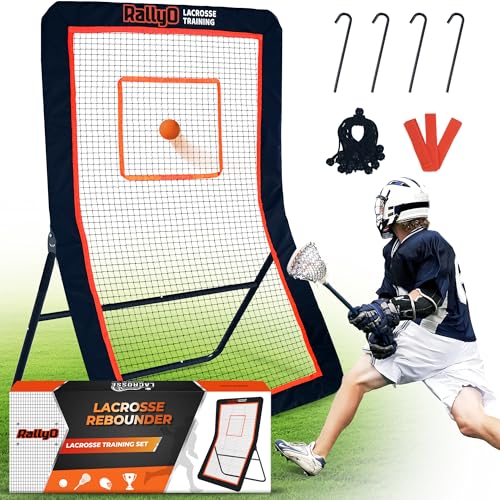
A lacrosse rebounder sends a thrown ball back toward the player so that a single person can practice catching, passing and stick work without a partner. Two main designs exist. Spring-style rebounders use a rigid mat or target stretched on heavy springs and send the ball back quickly and predictably. Net-style rebounders use tensioned netting across an angled frame; they are larger and lighter, and the return is slower and softer, which some players like for beginner work.
Both types let you change the angle. A steeper frame returns the ball higher, useful for practicing catches at head height, while a flatter frame returns it low to simulate ground balls.
What to Look For
Target size
Larger targets are forgiving for beginners, but accuracy training benefits from a smaller printed target. The Wolf Mini Wall’s 3×3 foot face was reported by one reviewer as less limiting than feared, while the 5×7 foot Aceletiqs offers about 35 square feet of rebound area for beginners who want fewer misses.
Rebound speed and consistency
Spring-style models are the usual pick for rebound quality. LaxDrip lists the STX Bounce Back as fast and consistent, and Peak Primal Wellness praises the Gladiator for bounce consistency. Net-style rebounders return the ball slower and can give uneven bounces if the tension varies.
Frame and finish
Powder-coated or galvanized steel resists rust better than bare metal. Several roundups mention rust problems on cheaper steel frames kept outdoors. UV-protected fabric, as listed for the All Ball Pro Stinger X, slows sun damage. LaxDrip also notes that sun can damage straps on the STX Bounce Back, so storing it covered is wise.
Weight and portability
Weights range from under 10 lb for the FireThreads FireBounce to about 76 lb for the All Ball Pro Stinger X in LaxDrip’s listing. A heavy rebounder is stable on hard shots but hard to move. Wheels, folding frames and carry straps matter if you pack away after each session.
Angle options
Three to five angle settings are common. More angles let players practice varied catches without moving the unit, which is useful for progressing from basic wall work to advanced stick skills.
Budget, Mid-Range and Premium Tiers
Budget tier
The Victorem, Apex and several net-style models from lesser-known brands sit here. They include a large target and several angles, but reviewers flag stability and durability concerns for advanced players. They suit beginners and casual practice.
Mid-range tier
The Zealfeel 4×7, Rukket 4×7, Aceletiqs 5×7 and STX Multi-Position offer large or double-sided targets with steel frames. They balance size and price and fit most backyard players.
Premium tier
The STX Bounce Back Target, All Ball Pro Stinger X and Champion Sports Deluxe XL are the heavier, higher-end picks. SportStop calls the Stinger X the premium option for serious practice. Buyers here pay for rebound consistency and sturdier construction.
Space, Setup and Care Notes
- Measure the throwing zone. Allow enough distance between the thrower and the rebounder for the return to arrive at a catchable speed, and keep the area free of obstacles.
- Use stakes or weight. Lightweight frames can tip or slide in wind. Use ground spikes where supplied.
- Guard against ricochets. A hard throw off a rigid target can bounce at odd angles. Keep windows and spectators out of the line of return.
- Cover or store it. Rain and sun age netting, springs and straps. One reviewer advises indoor storage or a cover for the Wolf Mini Wall.
- Inspect springs and cords. Look for stretched bungees, rust at joints and frayed netting before each session. Replace worn parts using the maker’s replacement list.
- Supervise young children. Frames with springs or tension cords can pinch fingers during assembly or adjustment.
Pick This Rebounder If You Fit This Profile
| Pick this if you… | Choose | Why |
|---|---|---|
| Want the most consistent return | STX Bounce Back Target or Gladiator | Spring-style construction |
| Have little storage space | Wolf Mini Wall | About 30 lb and foldable |
| Need to carry it to a park | FireThreads FireBounce | Under 10 lb with shoulder straps |
| Want a large target for beginners | Zealfeel 4×7 or Aceletiqs 5×7 | Large rebound area and several angles |
| Practice with a partner | STX Multi-Position | Double-sided design |
| Train often and keep it out | All Ball Pro Stinger X | UV-protected fabric, wheels, steel build |
| Want a stick-mounted solo trainer | B-Lax Blast | Attaches to the stick head |
Alternatives to a Dedicated Rebounder
Solo trainers
The B-Lax Blast attaches to a stick head and uses a regulation ball, giving a cheap and portable way to practice cradling and throwing. It does not simulate a return from a wall.
Plain wall practice
A smooth, blank outdoor wall or garage door can work, though it is hard on balls and sticks and returns erratic bounces. Make sure you have permission and keep a safe distance from windows.
A goal with shooting practice
If shooting is the priority, a backyard goal and a bucket of balls cover that need. A rebounder complements it by training the catching side.
Getting the Most From a Rebounder
Start with short, easy throws at a moderate angle and extend distance gradually. Work both hands equally, because a rebounder returns the ball to whichever side you throw from, which makes off-hand reps efficient. Mix in different throw types: overhand, sidearm and quick-stick catches, then vary the angle setting to train high and low catches. Because rebounders are repetitive, short sessions of ten to fifteen minutes with focus on form are usually more productive than long sessions of sloppy throws. If the frame shifts on every return, add weight or stakes before continuing. Younger players should use a smaller target or softer balls and keep a parent nearby, since rebounds can come back faster than expected.
When comparing models, also consider replacement parts. Springs, bungee cords and nets wear out, and a maker that sells spare parts extends the life of the unit. Reviewers mention extra tension cords included with the Rukket and a replacement net with the Victorem, which is a useful detail for buyers who expect heavy use.
Frequently Asked Questions
Are spring rebounders better than net rebounders?
Reviewers generally favor spring-style units for consistent, fast returns, while net-style units offer a larger, cheaper target. For serious skill work, a spring-style design is the usual pick. For young beginners, a large netted unit is more forgiving.
What size rebounder should I choose?
Targets range from about 3×3 feet to 5×7 feet. A bigger face is more forgiving, while a smaller face trains accuracy and takes up less space. Match the size to the player’s level and the yard.
Can I leave a rebounder outside?
Some models list UV-protected fabric and powder-coated frames, but outlets still advise covering or storing most rebounders to slow sun and moisture damage. Follow the maker’s care instructions.
How far should I stand from it?
Distance depends on the model and the angle. Many players start at a short distance and step back as skill grows. Use the maker’s manual and keep the return path clear of people.
Is a rebounder useful for goalies or for shooting?
Rebounders mainly train passing and catching. Some players use them for quick-stick work and ground balls. For shooting accuracy or goalie work, a goal and target are the better tools.
How heavy is too heavy?
Weights range widely, from under 10 lb to over 70 lb. Heavier units are steadier but difficult to move, so pick a weight you can handle for setup and storage. Wheels help on the heavier models.






Write Your Review
No reviews yet. Be the first to share your experience!