

Key takeaways
- Remove mud after play and let boots dry at room temperature, not on a radiator.
- Stuff with newspaper to absorb moisture and hold shape.
- Replace cleats when studs are worn or the sole begins to separate.
- Expect a hard-playing season out of most boots; leather lasts longer with conditioner.
The best soccer cleats depend on your foot shape, position and playing surface: Nike Mercurial for speed, adidas Predator for striking and control, Puma Future for an adaptive laceless-style fit, and Nike Phantom or adidas Copa for a soft touch on the ball. For most field players the safest all-round pick is a firm-ground boot from one of those lines in a mid-priced version, not the top-tier Elite model. Check the soleplate type first (firm ground, artificial grass, turf or indoor), because the wrong sole is the most common mistake.
Our top picks


As an Amazon Associate we earn from qualifying purchases at no extra cost to you.
Quick Comparison of the Best Soccer Cleats
| Pick | Best for | Upper | Feel | Fit | Price range |
|---|---|---|---|---|---|
| Nike Mercurial | Best for speed | Thin synthetic knit | Light, snug | Narrow | Mid to premium |
| adidas Predator | Best for striking | Synthetic with grip elements | Firm, grippy | Standard | Mid to premium |
| Puma Future | Best adaptive fit | Knit, laceless-style options | Flexible, secure | Standard | Mid to premium |
| Nike Phantom | Best all-rounder | Textured synthetic | Balanced touch | Standard to wide | Mid to premium |
| adidas Copa | Best soft touch | Leather or leather-like | Soft, classic | Wider | Mid |
| Mizuno Morelia | Best for leather and comfort | Kangaroo or synthetic leather | Soft, traditional | Wide | Upper-mid to premium |
Boot lines update regularly, so confirm the current model name and release on the brand’s website.
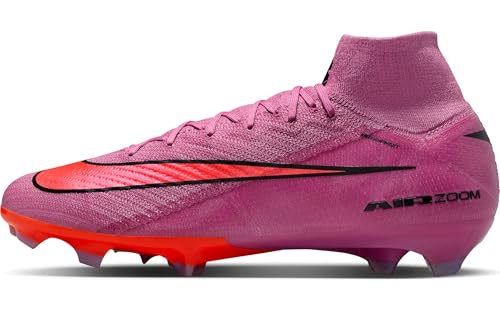
Best for Speed: Nike Mercurial
The Mercurial family is Nike’s speed boot, with a thin upper and a sole built for acceleration. Elite versions are very light, and this line suits wingers and forwards who rely on pace. Fit is narrow, so players with wide feet should try on sizes or consider other lines.
The trade-off is protection and padding. A thin upper offers less cushioning for striking, and the top-tier version is expensive for casual players. Look at the Academy or Club versions if budget matters.
Best for Striking: adidas Predator
Predator has focused on grip across the upper and a stiffened soleplate for power. Recent versions build grip into the upper rather than relying on add-on rubber, according to adidas, and many models include a fold-over tongue option.
Because the upper is firm, it can take time to break in. It suits midfielders and defenders who play long passes and take set pieces, and less so players who want a barely-there feel.
Best Adaptive Fit: Puma Future
Puma Future uses a knit-based upper that adjusts around the foot, with lacing options that give a secure feel. The Future line has moved toward a cleaner one-piece upper while keeping grip texture. This is a good option if you struggle with pressure points in standard boots.
Some players dislike the unconventional lace system, and the boots can feel looser through the toe box if you size up.
Best All-Rounder: Nike Phantom
The Phantom line targets players who want ball control and a reliable strike. The textured upper aids grip on the ball, and the fit tends to be a bit wider than the Mercurial. Reviewers frequently recommend it for midfielders and players with wider feet.
It is less light than Mercurial and costs about the same. Choose it when touch matters more than raw speed.
Best Soft Touch: adidas Copa
The Copa has a long history as a leather boot, and today’s versions give a soft, classic feel at a lower price than many high-end synthetic boots. They mold to the foot, which improves comfort over a season.
They absorb water on wet pitches and need more care than synthetic boots. They are ideal for players who prioritize touch and comfort over weight.
Best for Leather and Comfort: Mizuno Morelia
Mizuno’s Morelia range is known for premium leather uppers and wide, comfortable lasts. It appeals to players with wide or high-volume feet who find Nike and adidas too narrow.
The price of leather versions is high and availability can be limited in some regions. If you want a boot that feels broken in quickly, it is worth a look.
Soleplate Guide: Match the Surface
| Soleplate | Surface | Stud type | Notes |
|---|---|---|---|
| FG (firm ground) | Natural grass, dry to normal | Molded blades or conical | Standard choice for most players |
| SG (soft ground) | Wet or muddy grass | Longer, often removable metal | Check league rules |
| AG (artificial grass) | Third-generation turf | Many shorter studs | Reduces stress on knees |
| MG (multi-ground) | Mixed natural and artificial | Hybrid pattern | Useful if you play on both |
| TF (turf) | Hard or old turf | Small rubber studs | Good for training |
| IC (indoor court) | Hard indoor floors | Flat gum sole | Not for outdoor use |
How to Choose Soccer Cleats
Start with fit. There should be about a thumb’s width between your longest toe and the end of the boot, and the heel should not lift. Measure feet at the end of the day.
Know your foot shape. Narrow feet tend to suit Nike Mercurial, wide feet suit Mizuno or adidas Copa, and in-between feet can try Puma or Predator.
Choose by position. Wingers and forwards often prefer lightweight boots. Midfielders and defenders usually value a grippy, protective upper.
Do not overspend. The step down from Elite to Academy versions saves a lot of money with limited impact on casual play.
Rotate pairs. If you play several times a week, owning two pairs lets one dry fully between sessions.
Care and Durability
- Remove mud after play and let boots dry at room temperature, not on a radiator.
- Stuff with newspaper to absorb moisture and hold shape.
- Replace cleats when studs are worn or the sole begins to separate.
- Expect a hard-playing season out of most boots; leather lasts longer with conditioner.
Decision Matrix: Which Cleat for Which Player
| Player type | Choose | Reason |
|---|---|---|
| Winger or fast forward, narrow foot | Nike Mercurial | Light, snug, built for pace |
| Midfielder who passes and strikes | adidas Predator or Nike Phantom | Grip and ball feel |
| Player with pressure points | Puma Future | Adaptive upper |
| Wide foot, traditional feel | adidas Copa or Mizuno Morelia | Roomy last, soft touch |
| Youth player growing fast | Academy or Club level boot | Cheaper replacement, similar traction |
Worked Example: Cost Per Season
Suppose a premium pair costs several times more than a mid-level pair, and both last one season of two matches and two practices per week, roughly 100 sessions. The premium pair’s per-session cost is much higher, but the performance gain for most amateurs is small. If a child outgrows boots every six months, buying mid-level boots is far more economical. Buying lightly used boots from a team swap is another way to cut cost without sacrificing fit.
When trying boots in a shop, wear your match socks, lace them fully and walk, jog and plant your foot. If your heel slips, check a different last. If your toes touch the end while standing, go up a half size. For youth players, leave about a thumb’s width at the front, and re-check every two to three months.
Frequently Asked Questions
How should soccer cleats fit?
Snug but not painful, with about a thumb’s width of room at the toes and no heel slip. Boots stretch slightly, especially leather.
Can I use firm-ground cleats on turf?
You can, but long blades can grip too hard on artificial turf and strain knees. AG or turf soleplates are safer for frequent play.
Are expensive cleats worth it?
Elite models save weight and add premium materials, but mid-level versions provide similar traction and fit. Most recreational players do not need the top tier.
How long do soccer cleats last?
One to three seasons depending on use, surface and care. Hard turf wears the studs fastest.
Which cleats are best for wide feet?
Look at adidas Copa, Mizuno Morelia and Nike Phantom, which generally run wider than Mercurial.




Write Your Review
No reviews yet. Be the first to share your experience!